The Dental Medical Convergence
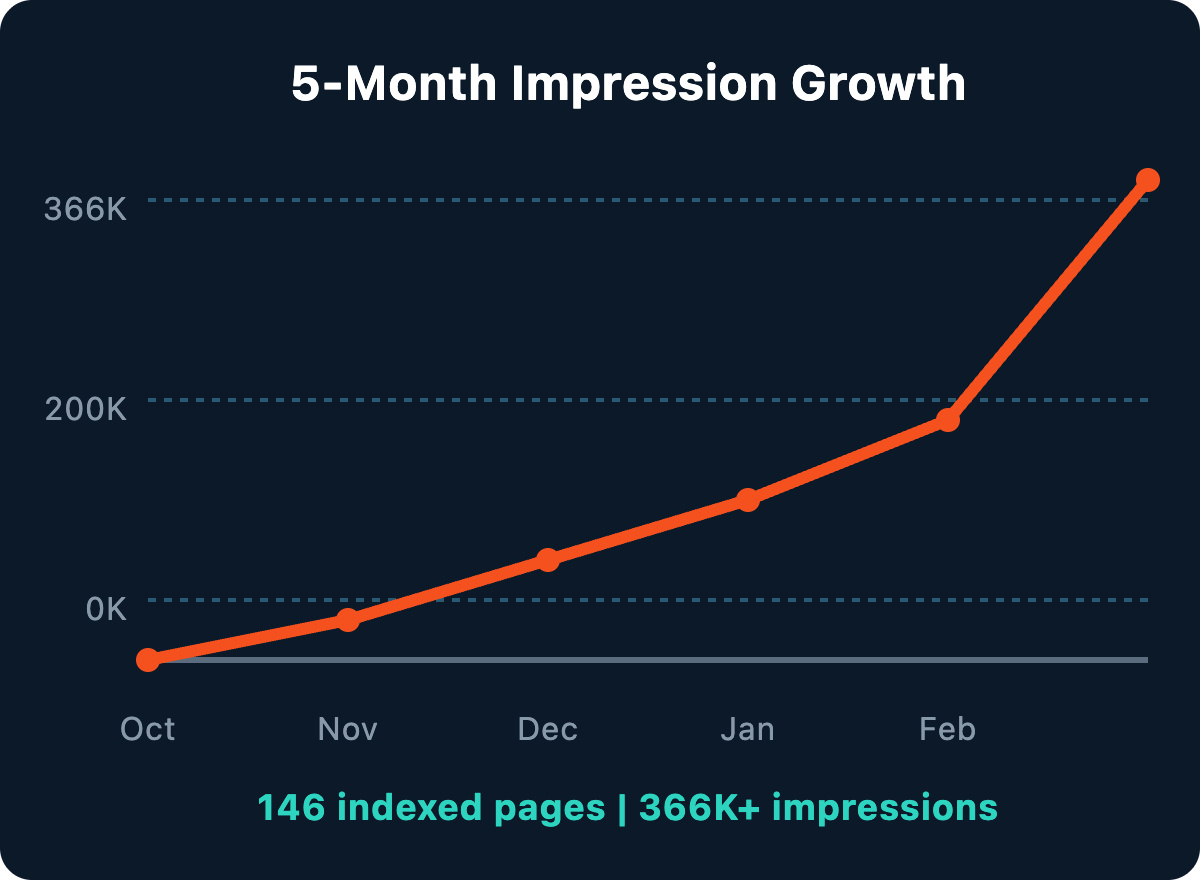
Dr. Chuck Reinertsen spent 40 years connecting dental infections to heart disease, pregnancy complications, and Alzheimer’s. The medical establishment resisted. So, we took his message directly to patients through search. In 5 months, DAP built TDMC from zero search visibility to 366K+ impressions, 47 top-10 rankings, and 25% Share of Voice in oral-systemic health.

The Dental Medical Convergence is a 501(c)(3) nonprofit founded by Dr. Charles Reinertsen, a dentist with over 40 years of clinical experience. Its mission is to educate the general public about the critical connection between oral health and systemic disease. 90% of dental infections cause no pain, yet the bacteria enter the bloodstream and contribute to cardiovascular disease, pregnancy complications, diabetes, Alzheimer's, and more. Most physicians do not examine the mouth, and The Dental Medical Convergence provides this life-saving information directly to patients through its website, book, videos, and educational content.
How We Helped The Dental Medical Convergence


Project Summary
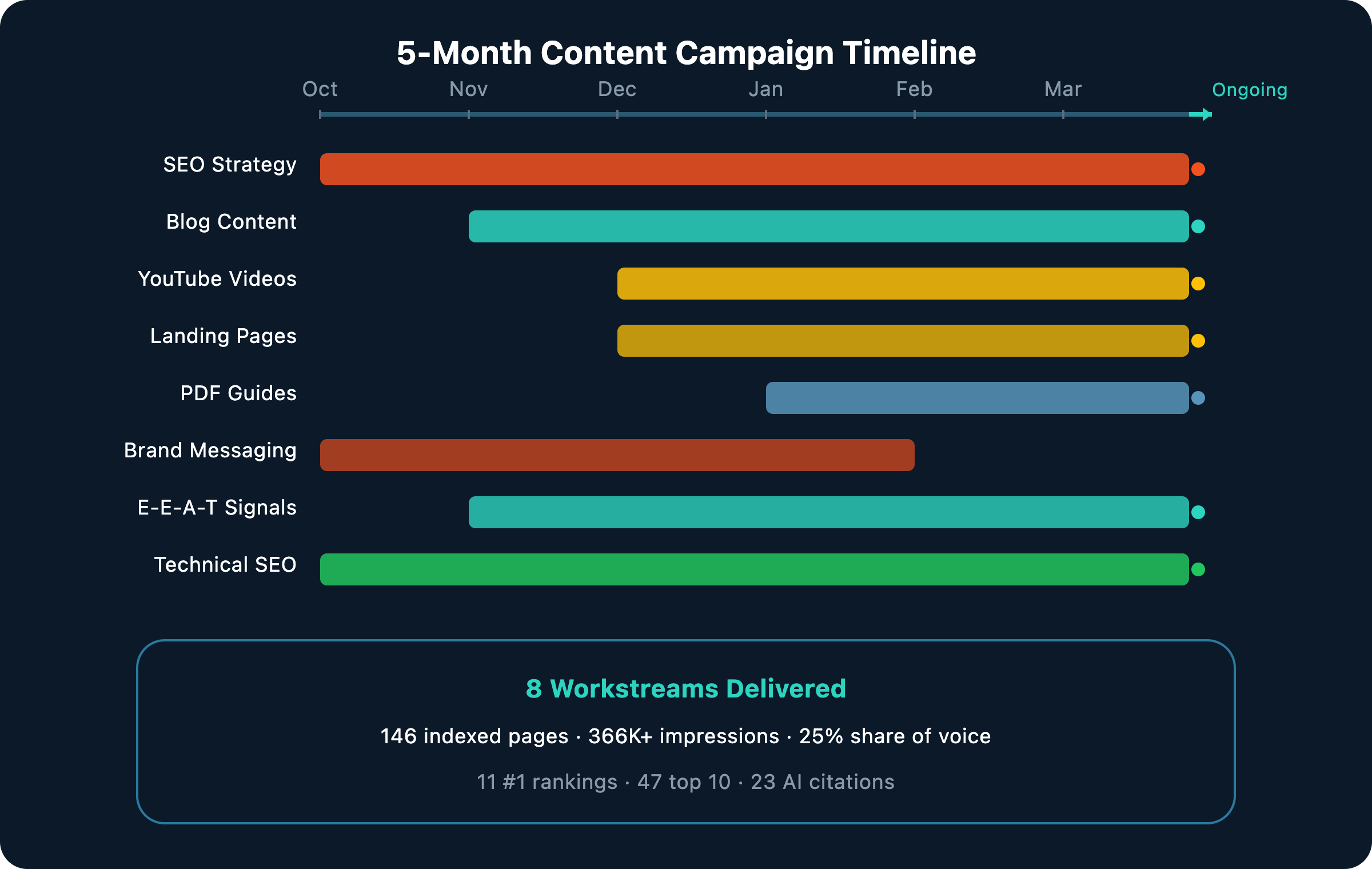
TDMC had the science but no audience, and engaged Digital Authority Partners to fix that. Starting in October 2025, we built two content clusters around the topics patients actually search for: Pregnancy & Oral Health and Heart Health & Oral Health.
Each cluster paired a landing page with 10-15 blog articles targeting real patient questions like “mouthwash safe during pregnancy” and “broken tooth while pregnant.” We layered in YouTube videos with Dr. Chuck, downloadable PDF guides, a brand messaging framework, and E-E-A-T optimization across the board.
Five months later: 366K+ impressions across 146 pages, 25% Share of Voice, and 11 #1 Google rankings. From nothing.
The Challenge
 Zero Digital Presence
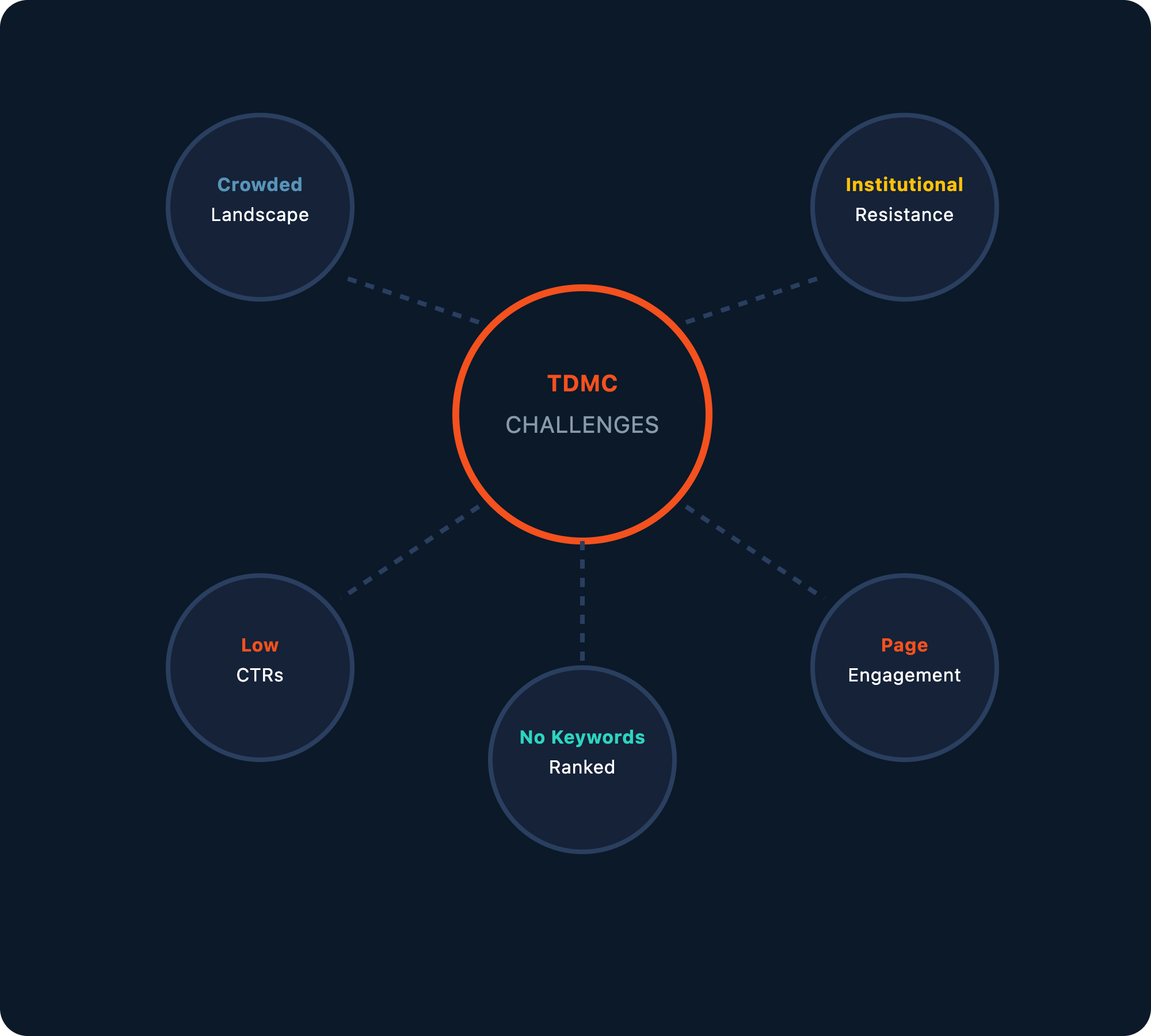
 No Search Visibility, No Keyword Rankings, No Authority
When DAP started working with TDMC, the organization had a website but zero organic search visibility. Not a single keyword ranked. No content strategy existed. The site generated virtually no organic traffic despite Dr. Reinertsen's 40 years of expertise and his message about the oral-systemic connection.
 Institutional Resistance
 Hospitals and Physicians Refused to Listen
Dr. Reinertsen had tried the traditional route, educating hospitals and physicians about the oral-systemic connection. Hospitals said they didn't want to "be in the referral business." Physicians said they didn't have time (70%+ work for corporations with 15-minute patient slots). The medical establishment wasn't going to change from the top down.
 Crowded Health Content Landscape
 Competing Against WebMD, Mayo Clinic, and Healthline
The oral health space online is dominated by massive health publishers with decades of domain authority and millions of backlinks. A small nonprofit with no search history had to find a way to outrank established players. Not by competing head-to-head, but by owning underserved niches and answering genuine questions.
 Page Engagement Failures
 Website Failing to Convert Visitors into Action
Even as traffic grew, key pages showed average engagement times under 20 seconds with zero key events. Visitors weren't scrolling, weren't clicking, weren't converting. The content strategy was driving traffic successfully, but the website itself wasn't capturing that interest.
How we Helped The Dental Medical Convergence
Content Clusters That Own the Conversation
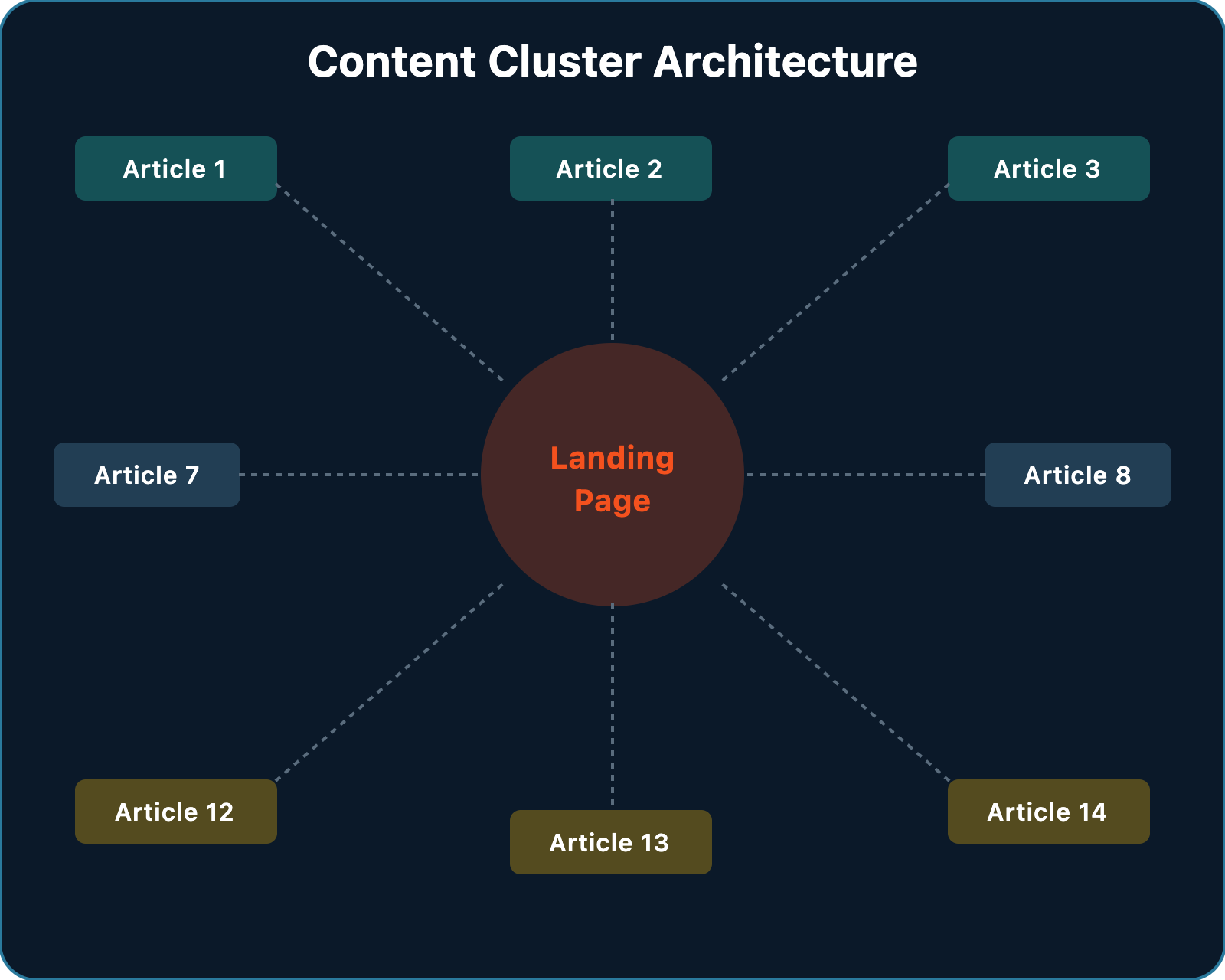
We built structured content clusters around TDMC’s two most important verticals.
- Built the Pregnancy & Oral Health cluster: 1 detailed landing page and 15 supporting blog articles targeting specific patient questions like "mouthwash safe during pregnancy," "postpartum cavities," and "broken tooth while pregnant"
- Launched the Heart Health & Oral Health cluster with the same playbook: landing page plus supporting articles covering "which tooth is connected to the heart," "vascular disease and oral health," and related long-tail keywords
- Ensured that every article answers a specific, real patient question pulled from keyword research. Not generic health content, but real searches from people looking for answers
- Followed a strict brand voice guide: authoritative but never condescending, educational but never lecturing, with Dr. Chuck's 40 years of clinical experience woven into every piece
Making Google Trust a Brand-New Site
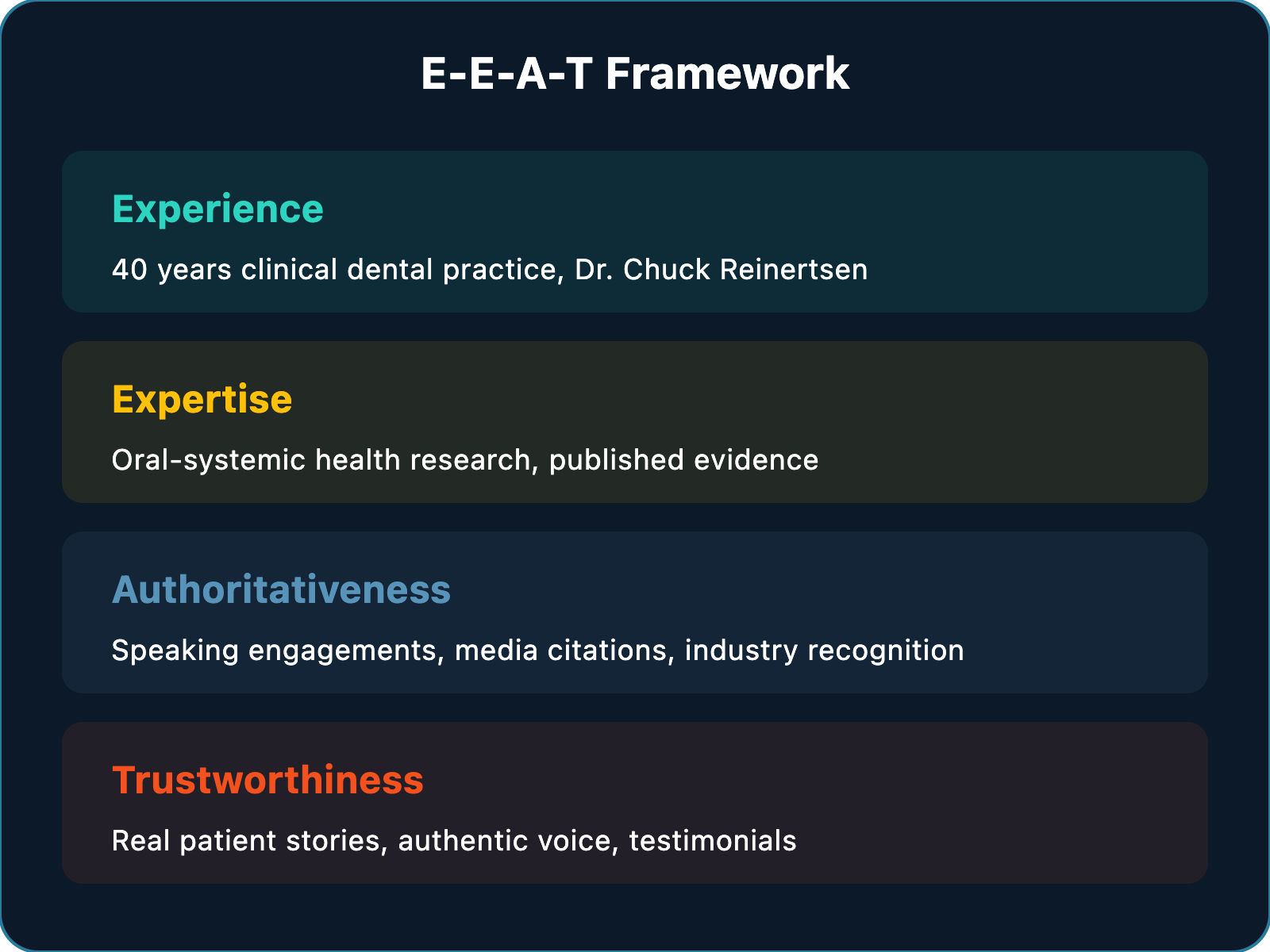
Google doesn’t rank new sites for health topics unless it trusts the author. We gave Google every reason to trust Dr. Chuck.
- Authored all content under Dr. Charles Reinertsen's name with detailed author bio pages linking clinical experience, speaking engagements, and published research
- Wove real patient stories into content, with case studies showing real outcomes that validate the oral-systemic connection
- Built a 15-anchor brand messaging framework defining Dr. Chuck's core messages, from "90% of dental infections have no pain" to "Your mouth is the front door to your body"
- Created a detailed brand voice guide so every copywriter matched Dr. Chuck's real tone: calm confidence, common-sense explanations, flowing sentences, proper medical terminology with plain-English explanations
Blog, Video, PDF, Landing Page. All Connected.
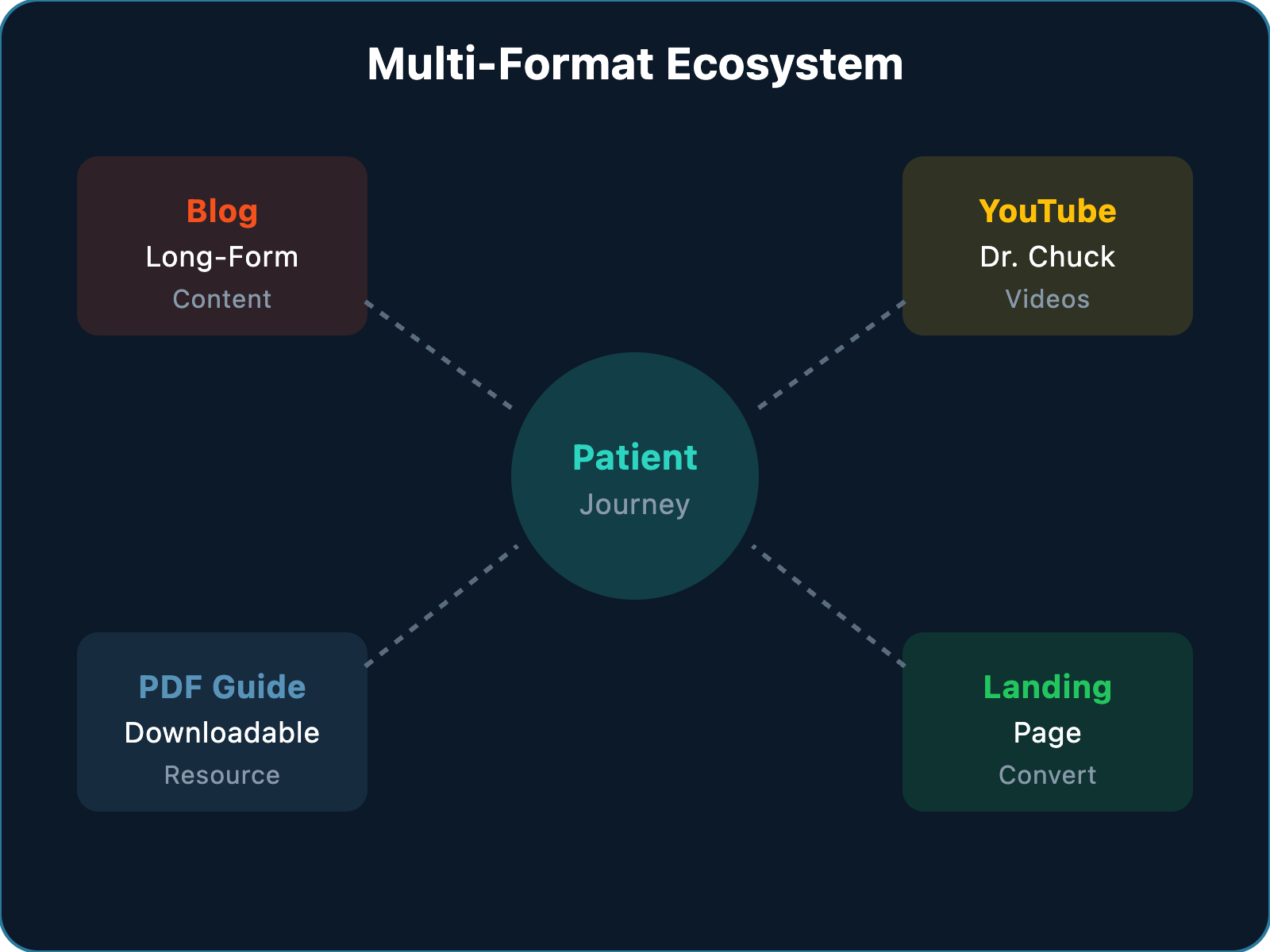
A single blog post only goes so far. We built a system where every format feeds the others.
- Produced YouTube videos featuring Dr. Chuck explaining oral-systemic health concepts, optimized for video SEO and embedded across relevant blog posts
- Created downloadable PDF patient education guides for both pregnancy and heart health audiences. These are resources patients can save and share with their families and doctors
- Built detailed landing pages for each content pillar designed to turn visitors into supporters
- Created a content loop: a pregnant woman searching for mouthwash safety finds a blog post, watches a Dr. Chuck video, then downloads an oral health guide. One search becomes three interactions
Owning the Search Results Page (and AI Answers Too)
Ranking is one thing. Showing up multiple times on the same results page is another. We did both, and got TDMC cited by AI models along the way.
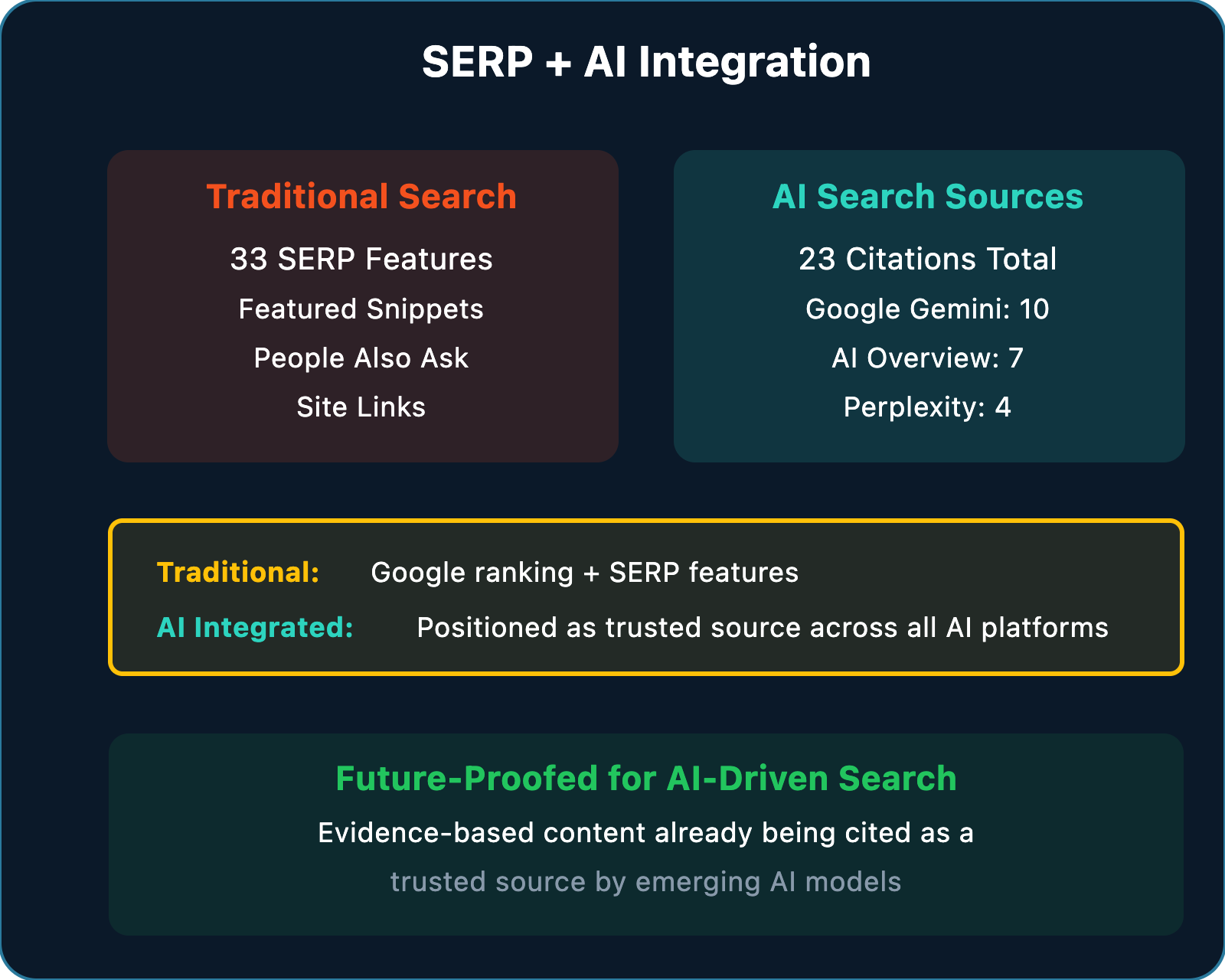
- Secured 33 SERP features including Featured Snippets, People Also Ask placements, and Site Links. TDMC's expertise shows up across the entire search results page, not just one listing
- Owned People Also Ask for: broken tooth while pregnant, postpartum tooth decay, mouthwash and pregnancy, tooth loss pregnancy, postpartum gingivitis, preventing tooth loss during pregnancy
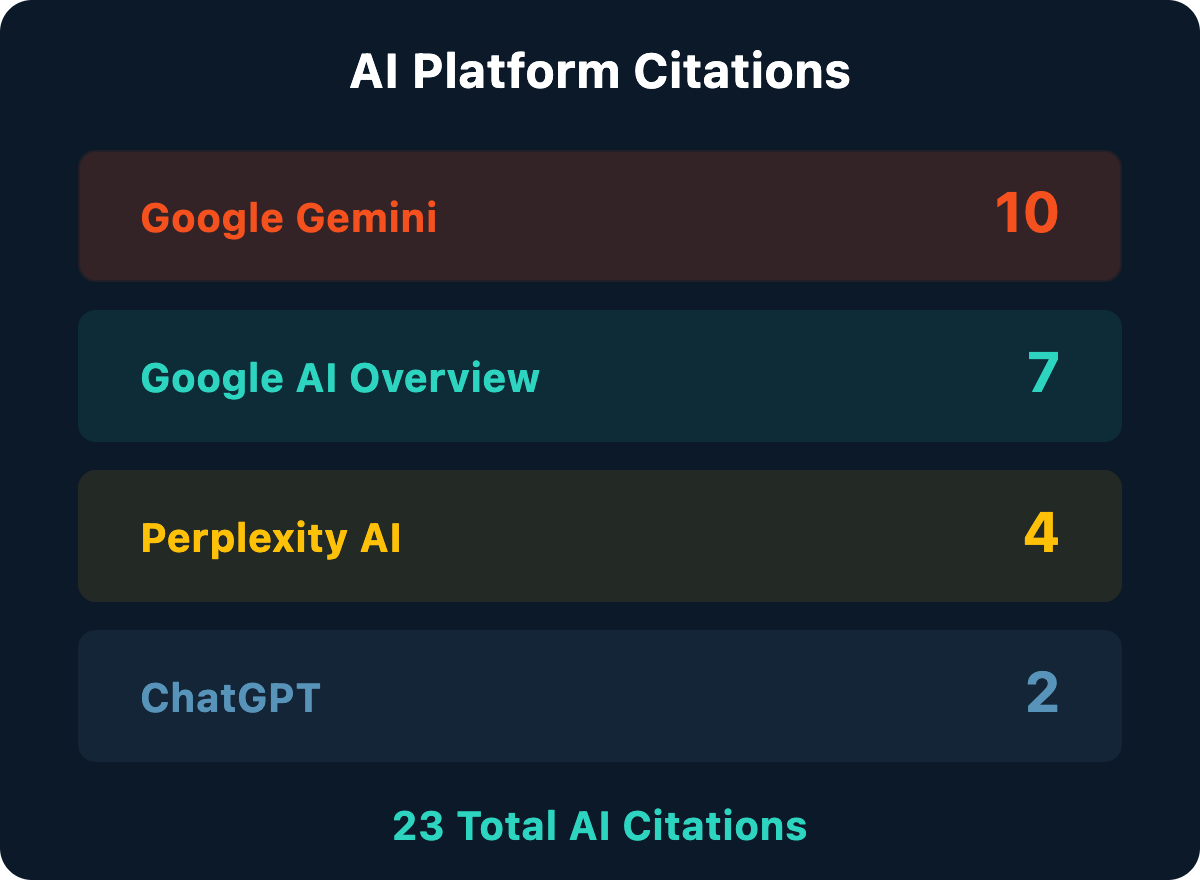
- Earned 23 AI search citations: Google Gemini (10), Google AI Overview (7), Perplexity AI (4), ChatGPT (2). When patients ask AI assistants about oral-systemic health, TDMC is the source they get
- Placed TDMC in the training data early. That's an advantage that compounds over time as AI search grows
What we Achieved

TDMC pulled in 366,000+ search impressions across 146 indexed pages in just 5 months. Content published through the DAP retainer ranked on page 1 of Google for competitive pregnancy and oral health keywords. The canker sores page alone generated 82,221 impressions at position 4.2. Mouthwash safety: 78,091 impressions. Pregnancy tooth pain remedies: 69,722. Three pages doing the heavy lifting while the rest of the site kept climbing.

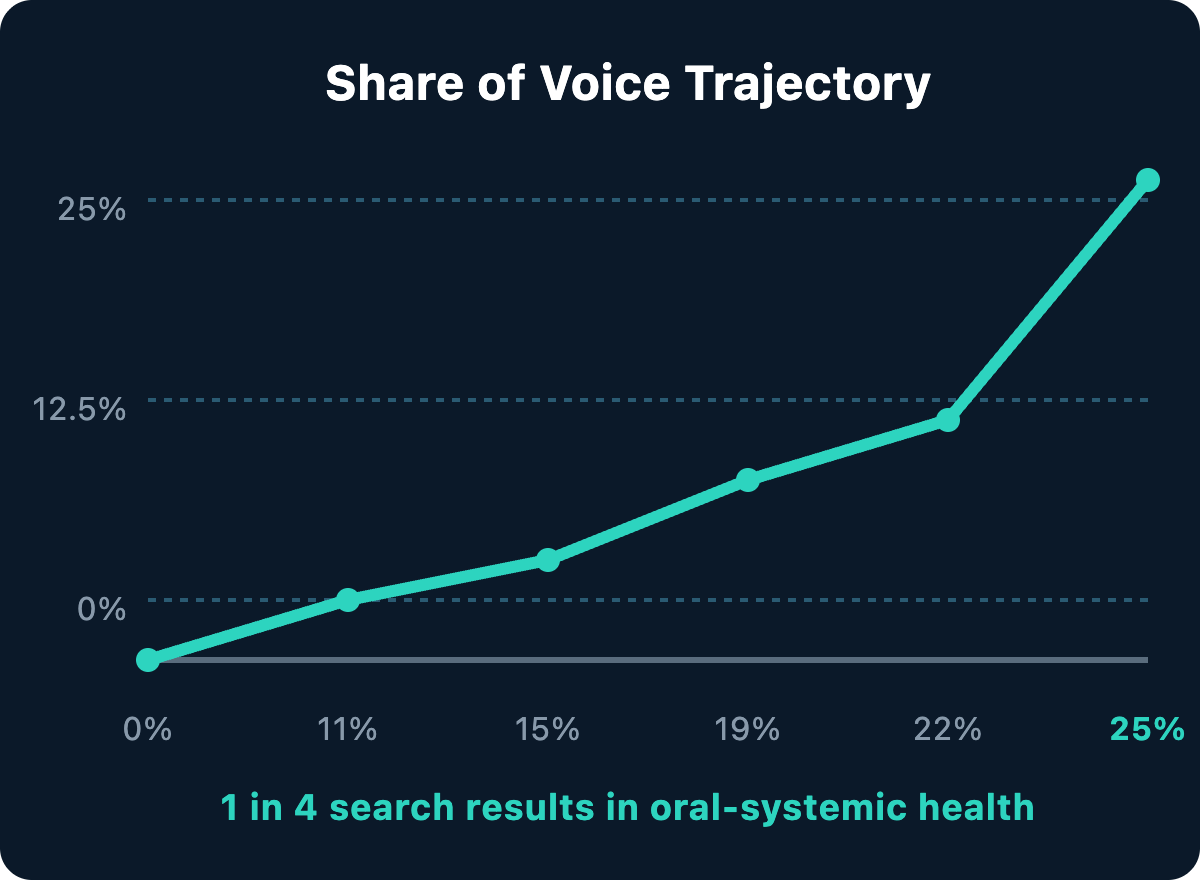
TDMC now owns 25% of the search conversation for tracked oral-systemic health topics. The climb was steady: 11% in November, 15% in December, 19% in January, and 25% by late February. One out of every four search results in the space now belongs to TDMC. For a site that didn’t exist in search 5 months earlier, that’s a quarter of the market captured before competitors could react.

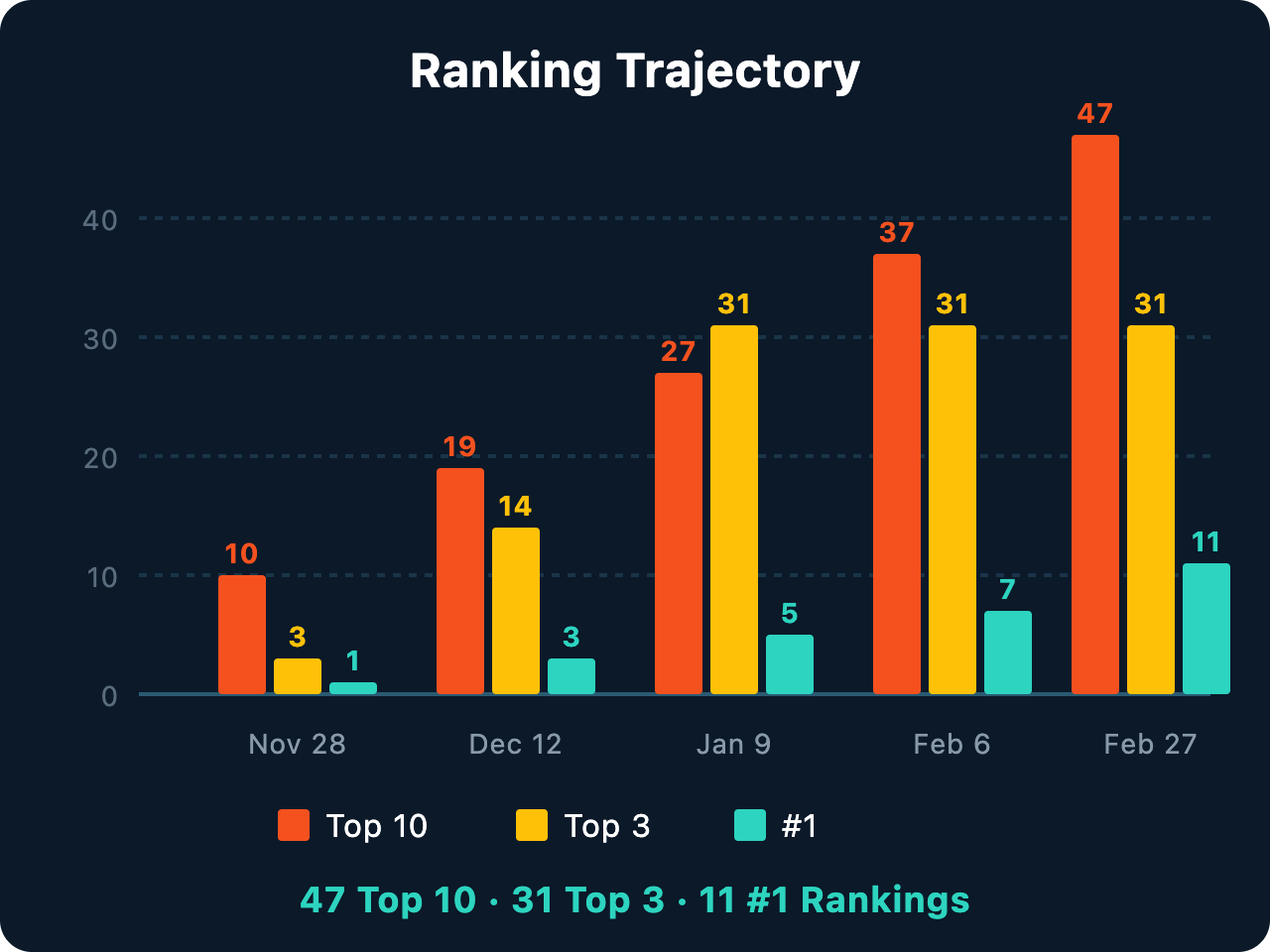
By late February 2026, TDMC held 47 Top 10 rankings, 31 Top 3 rankings, and 11 #1 rankings. The growth accelerated each month. Top 10 keywords nearly quintupled between November and February. Top 3 more than doubled in three weeks. And #1 rankings jumped from 3 to 11 in a single reporting period. Once Google started treating TDMC as an authority in oral-systemic health, the rankings compounded fast.

TDMC’s content is already being cited across major AI platforms: Google Gemini (10 citations), Google AI Overview (7), Perplexity AI (4), and ChatGPT (2). When patients ask AI assistants about pregnancy and oral health, dental infections and blood pressure, or oral-systemic connections, TDMC shows up as the source. That matters because AI-powered search is growing fast, and the sites getting cited now are building an advantage that’s hard to replicate later.

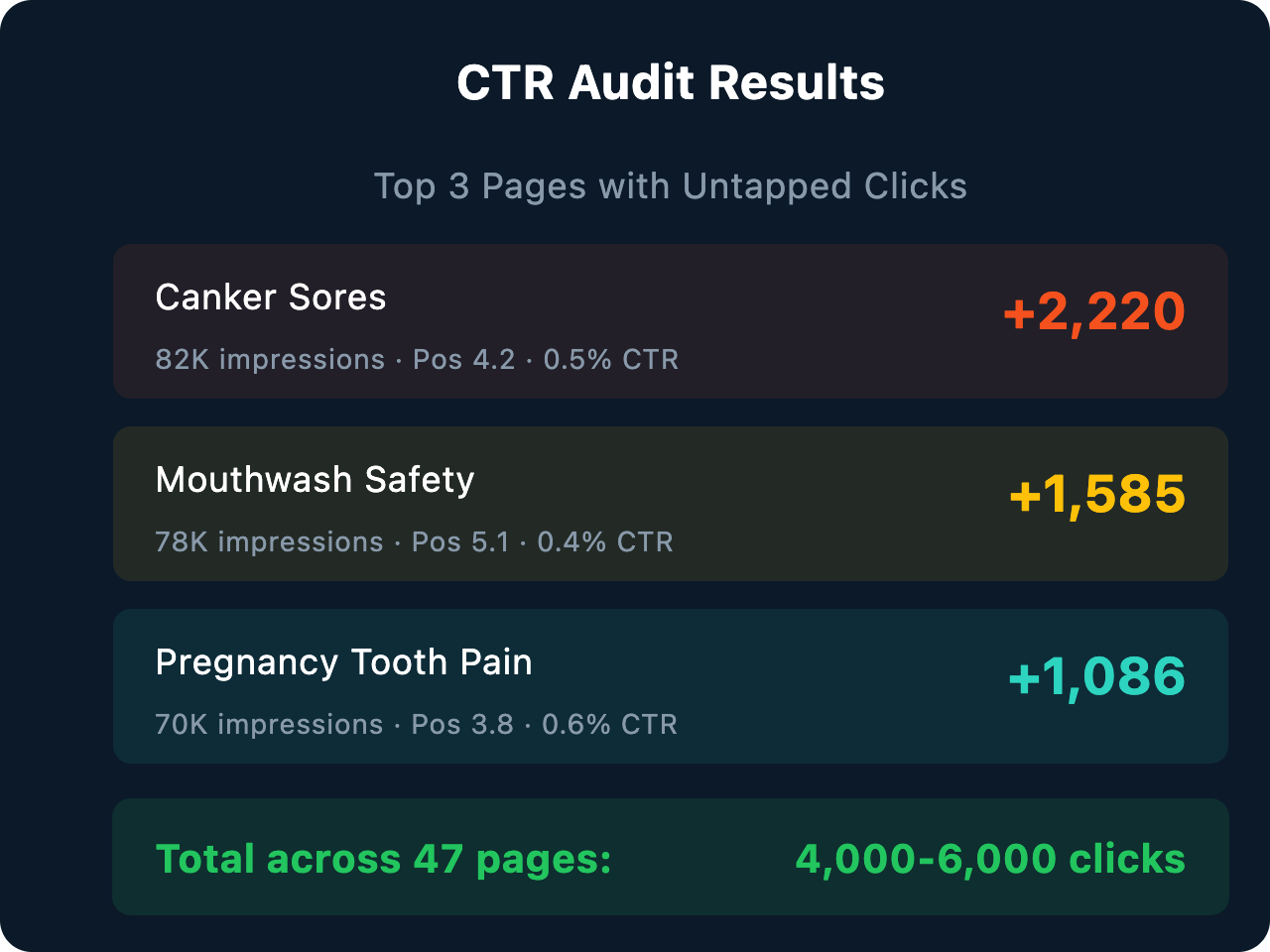
DAP’s performance audit uncovered 4,000 to 6,000 additional clicks across 47 ranking pages that existing titles and meta descriptions were failing to capture. The canker sores page alone had 82,221 impressions at position 4.2 but only a 0.5% CTR, meaning 2,220+ clicks were going to competitors. The mouthwash safety page: 1,585 missed clicks. Pregnancy tooth pain: 1,086. DAP delivered a page-by-page CTR optimization roadmap targeting the highest-value gaps first.