ApexCX
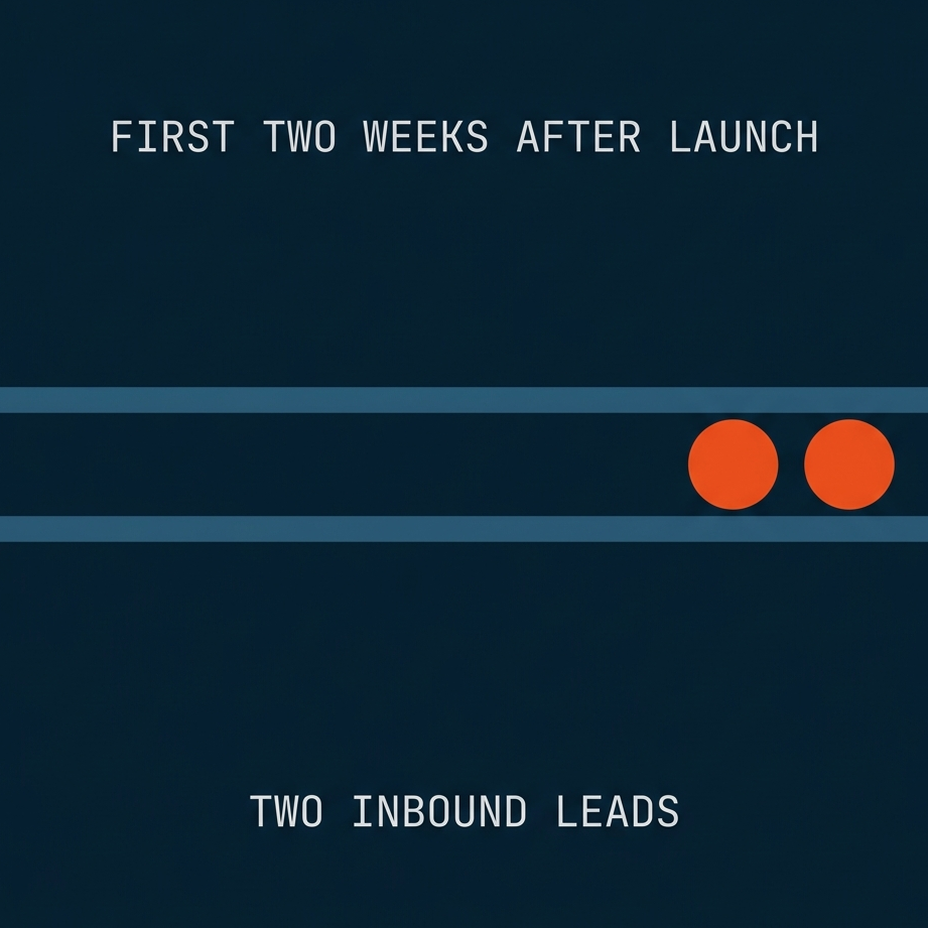
ApexCX has fixed support operations across 300-plus projects. Its CRO says it rarely loses a shortlist. Getting on one was the problem. Organic search returned nine terms against a same-authority competitor’s 300. Fourteen AI answers about CX consulting named competitors. Its site carried 493 junk URLs and a 217-word service page. DAP shipped 11 audits before publishing a page and put conversion tracking live on day 18. Then it rebuilt 10 pages and cleared the junk URLs from the index. The site went live on day 54. Two buyers filled in the form within two weeks.

ApexCX, Inc. is a customer experience firm headquartered in Towson, Maryland, with more than two decades of collective CX and BPO experience behind it. The team advises and then makes the change operationally real. It is not a BPO and it is not a call center. ApexCX designs CX operating models, runs contact center assessments, manages vendor selection and RFPs, and builds workforce management and quality assurance programs. More than 300 projects sit behind that work, across retail, e-commerce, technology, telecom, healthcare, and financial services.
Services We Provide


Project Summary
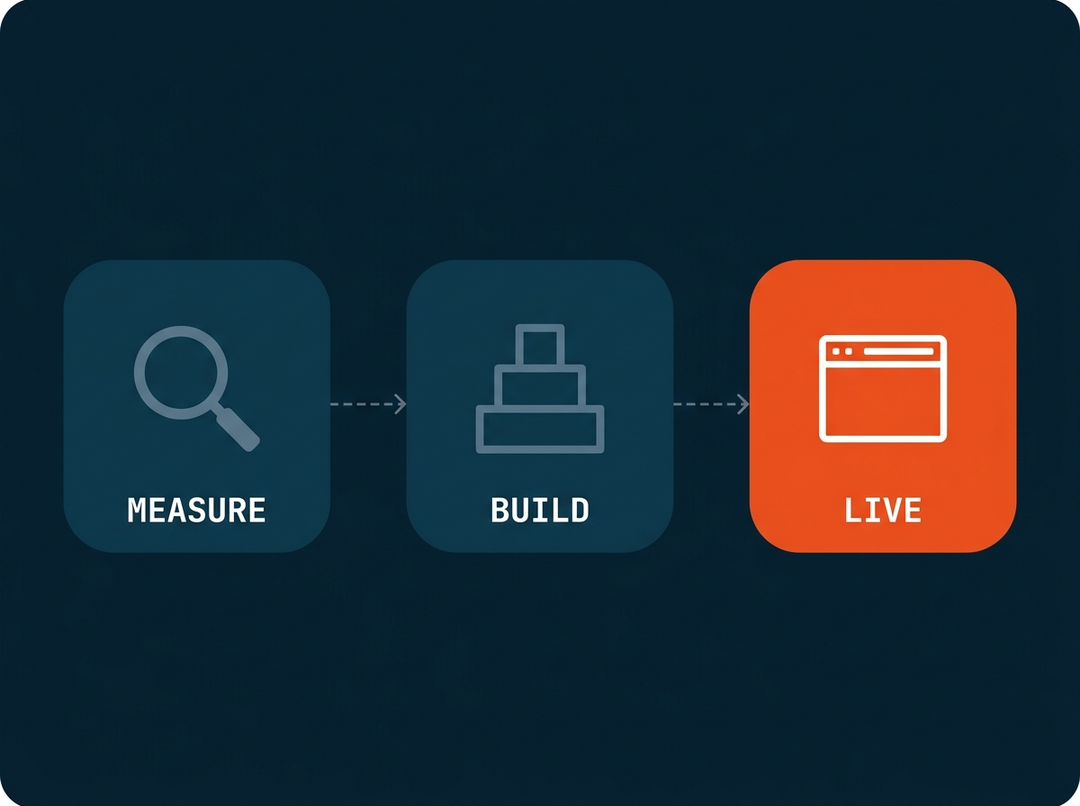
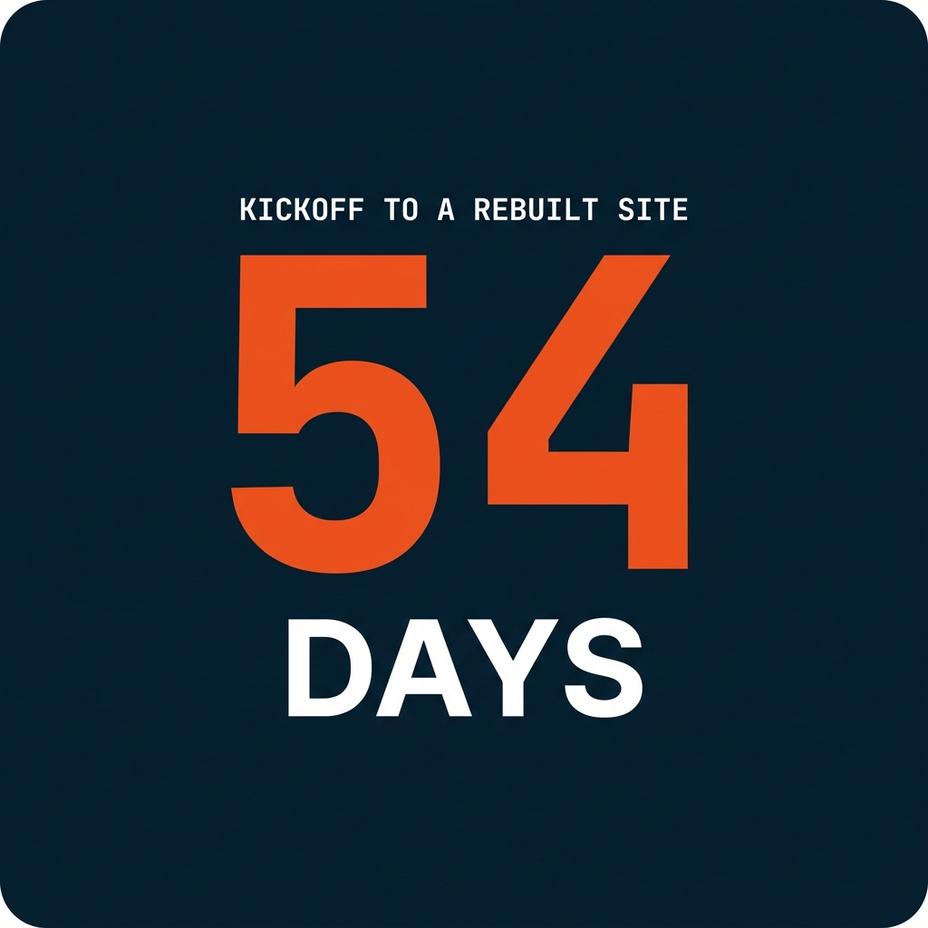
ApexCX had the reputation and the win rate. It had no way for buyers to find it. Pipeline came from referrals and outbound, and the company had never worked with an SEO agency. So month one published nothing and measured everything: a technical audit, a schema spec covering all 16 page templates, an analytics audit, a backlink profile review, and an AI visibility baseline run live across five engines. Five workstreams reached the same conclusion. The site could not carry a content strategy. We replaced it instead of optimizing around it. DAP wrote the copy, designed the pages, and built them. Conversion tracking went live on day 18. The homepage, the About page, and four rebuilt service pages went live on August 12, 2026, 54 days after kickoff. The rest of the set followed inside the week. Two weeks after launch, two buyers submitted the contact form and ApexCX spoke to both.
The Challenge
 Pipeline Concentration
A Pipeline That Ran on Referrals and Outbound
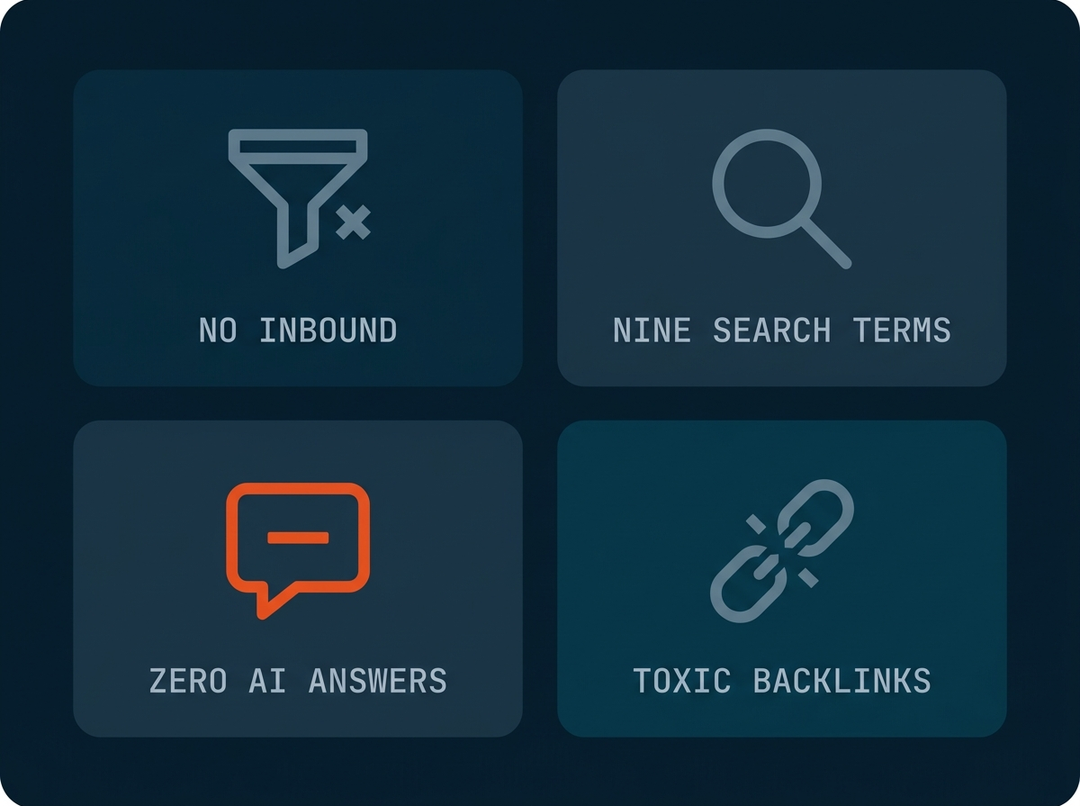
Almost every ApexCX deal traced back to someone who already knew the firm, or to someone the team chased. ApexCX puts typical deal sizes at $50,000 to $250,000 on a one to three month sales cycle. The revenue was real. The risk was that both channels run on effort the firm spends again every month. Nothing arrived on its own, and a sales team of one CRO and one inside-sales rep had no inbound channel to work.
 Organic Invisibility
9 Search Terms Against a Competitor's 300-Plus
ApexCX ranked for nine search terms. A competitor at the same trust score ranked for more than 300. Bain, BCG, and COPC held the commercial terms buyers type. One of those terms, customer experience consulting, carries 865 searches a month at a difficulty score of 9. The firm's six service pages ran between 217 and 642 words, a fraction of what competes on those terms.
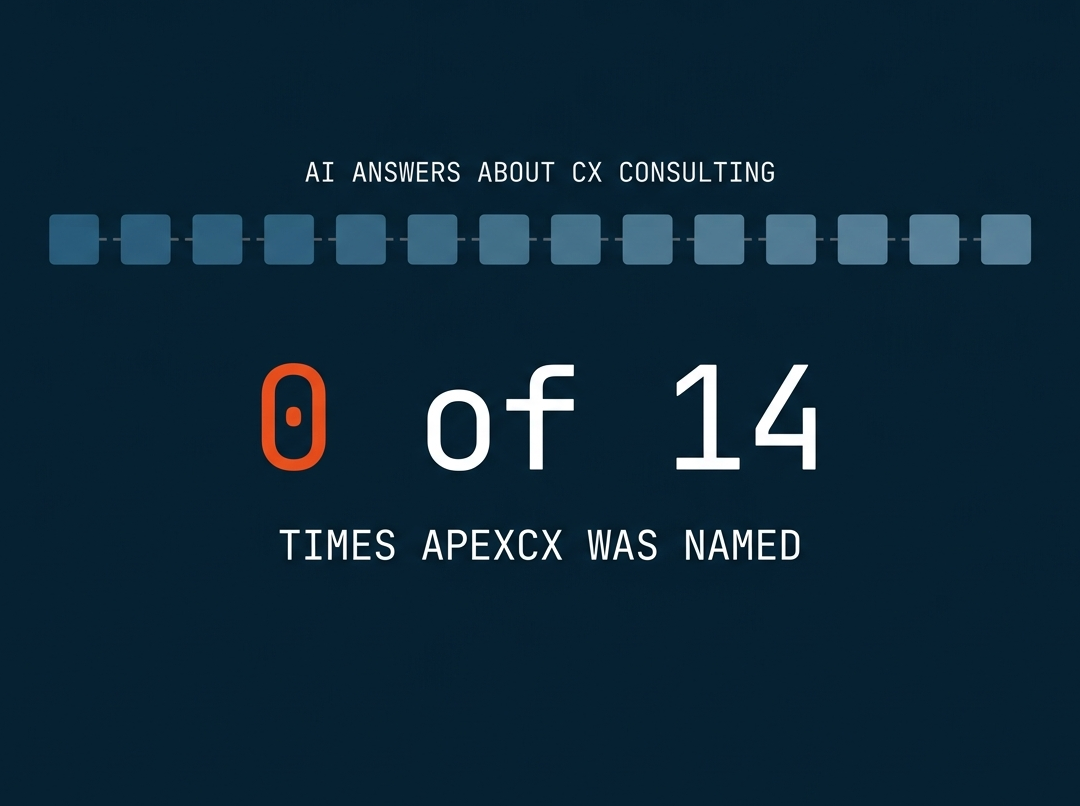
AI Search Blind Spot 0 of 14 AI Answers Named ApexCX
We ran 13 buyer questions live across ChatGPT, Claude, Perplexity, Microsoft Copilot, and Gemini. Those searches returned 14 answers. ApexCX appeared in none of them. Buyers increasingly ask an AI engine who can help before they open a results page. In that conversation, the firm did not exist.
 Technical and Backlink Debt
A 144-Domain Disavow and 493 Junk URLs in the Index
Of 529 referring domains, 431 showed spam signatures. That pattern follows most rebrands, and no penalty had landed, but 144 domains still warranted a disavow. The index was worse: 493 tag archives competing with the pages that mattered, 161 pages with no H1, and 176 pages carrying duplicate meta description tags. PageSpeed rated mobile Needs Improvement.
How We Helped ApexCX, Inc.
A Full Diagnostic Before a Single Page Moved
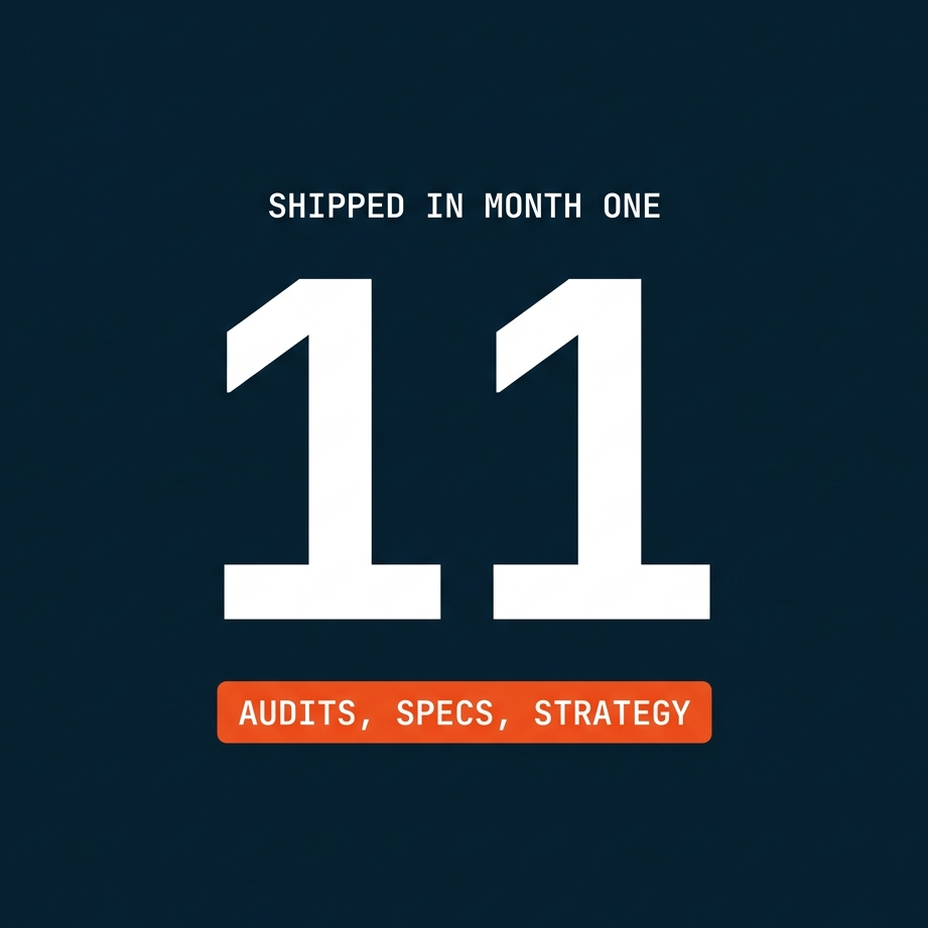
Month one produced 11 strategy and audit deliverables and published no pages. ApexCX had never worked with an SEO agency, so nobody could state the starting position. We measured it first, from five independent directions. Every decision after that had a number behind it.
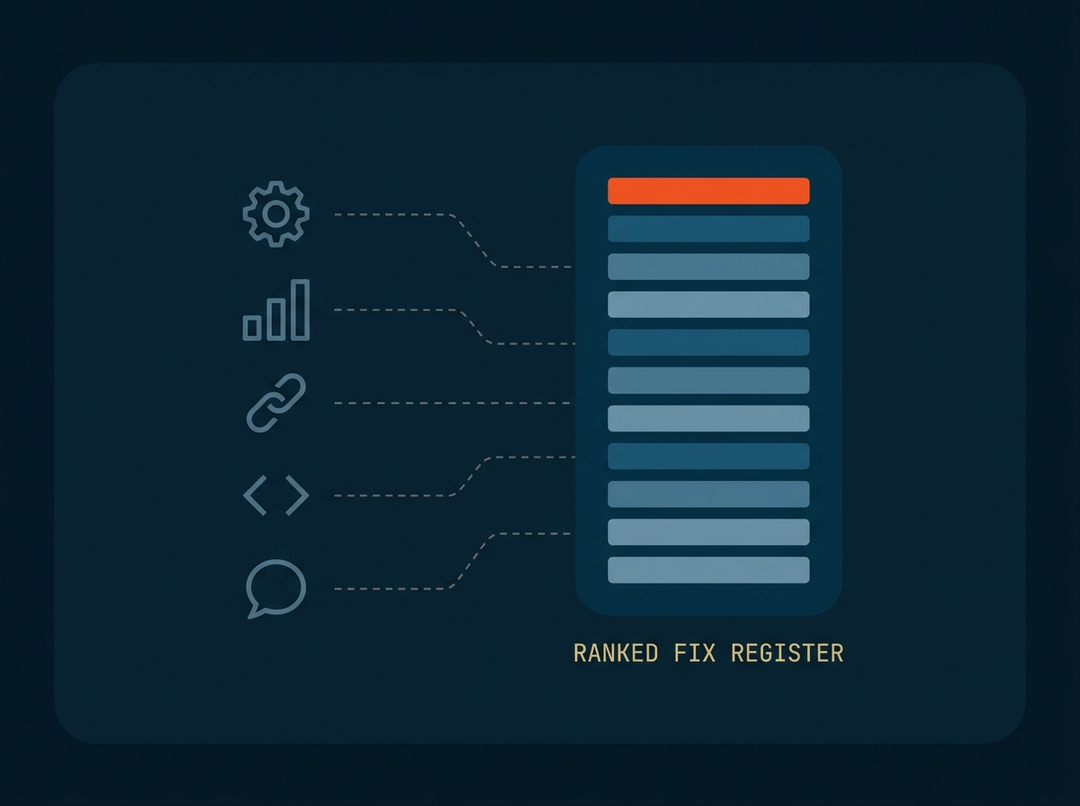
- A ranked fix register: every crawl, indexation, architecture, linking, speed, and structured-data problem ordered by what it was costing in traffic
- A schema plan covering all 16 page templates, so every page type tells search and AI engines what it is
- An architecture and keyword priority map ordered by what ApexCX could win, not by what looked biggest
- A conversion-tracking plan, and a backlink review that produced the 144-domain disavow file
- Held every page to 80% or more unique body copyA brand communications guide, so the copy that followed sounds like ApexCX and not like an agency
- FAQ research across the top pages, feeding both the on-page content and the schema
Conversion Tracking Live on Day 18
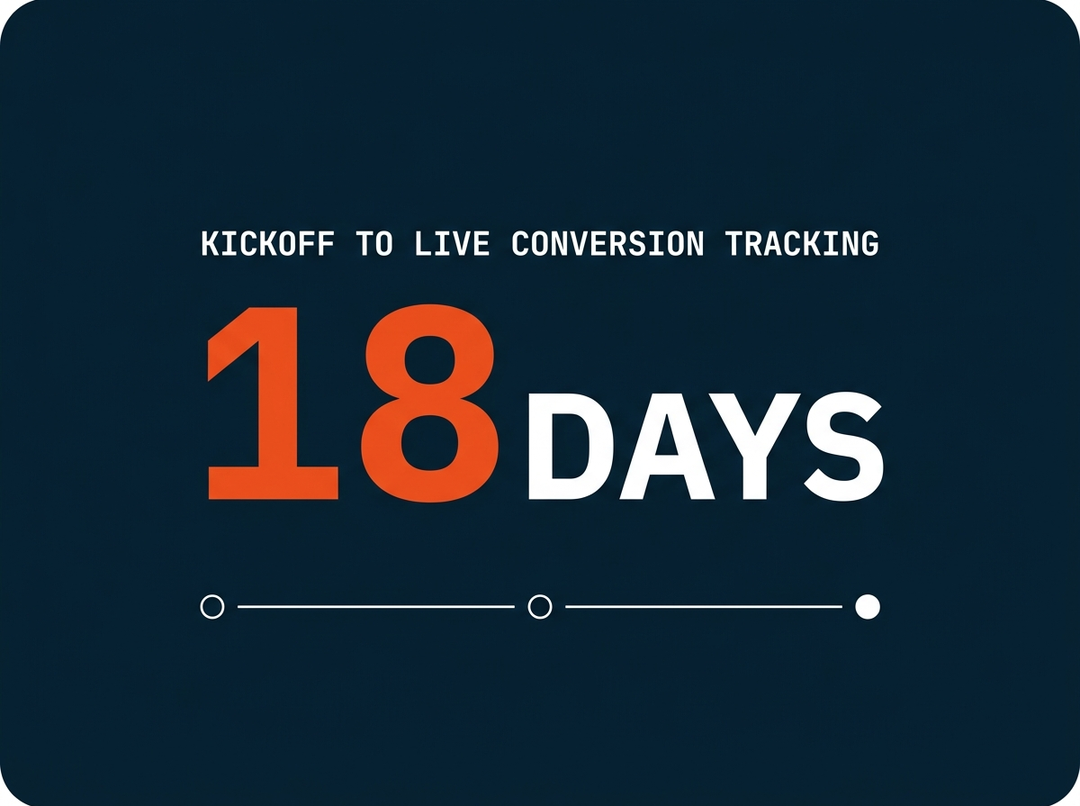
Forms ran across three separate tools. Google Analytics recorded none of them as conversions. The reports showed zero because nobody had configured an event, not because nobody converted. We built the measurement layer before any traffic work started.
- Contact form and RFP submissions became the tracked conversions, so a lead is countable the moment it arrives
- Every tag staged, reviewed, published, and verified firing, so the numbers hold up when someone checks them
- On-page engagement measured rather than inferred, through a single button tracker
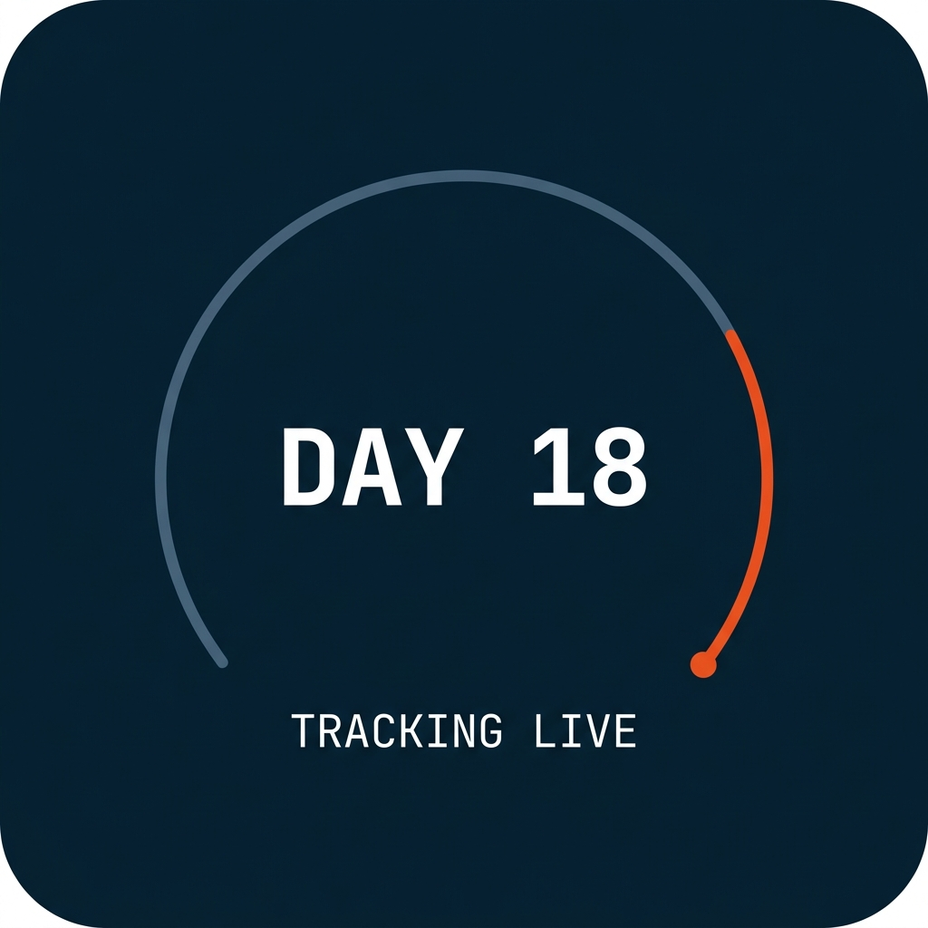
- Live and validated on July 7, 2026, 18 days after the discovery call
- In place before the rebuild shipped, so no launch traffic went unmeasured
A Website Rebuilt, Not Optimized Around
The existing site could not carry the content strategy, so we replaced it instead of optimizing around it. DAP owned the whole chain: copy, design, and development. That is why the build took weeks and not quarters.
- A homepage that says what ApexCX does in the first screen, built from three concepts and one merged final direction
- The AI in Customer Experience page rewritten from 406 words to 1,500, enough depth to compete on the term
- A contact page built around the form and the tracking behind it
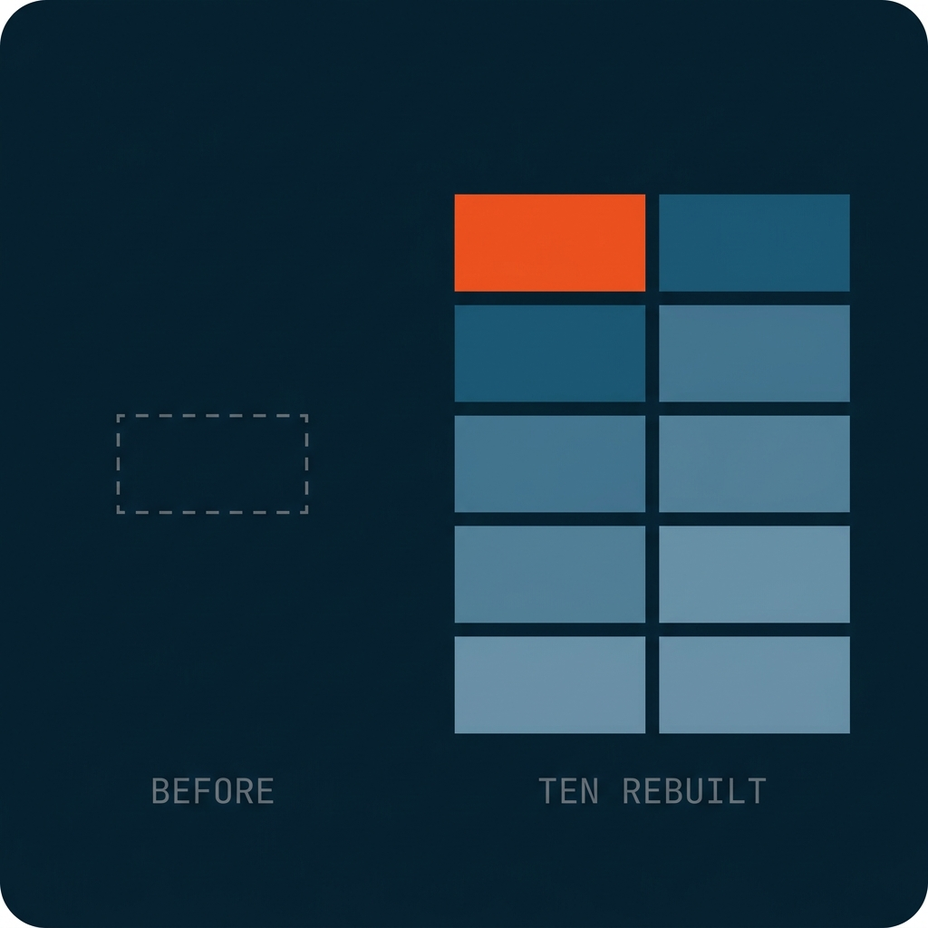
- Six service pages rebuilt: Assessment and Design, Implementation, Metrics and Analytics, AI in Customer Experience, Managed Services, and BPO and Alternatives
- About and Our Partners rebuilt, and a named author byline in place of organization-level attribution, so the expertise has a person behind it
- One design system across every page, so the next page ships faster than the last
A Keyword Strategy Built on Winnable Terms
ApexCX asked for speed. That ruled out a keyword list that takes a year to move. We sequenced the plan by difficulty instead of search volume. The first pages published are the ones that can rank inside the contract term.
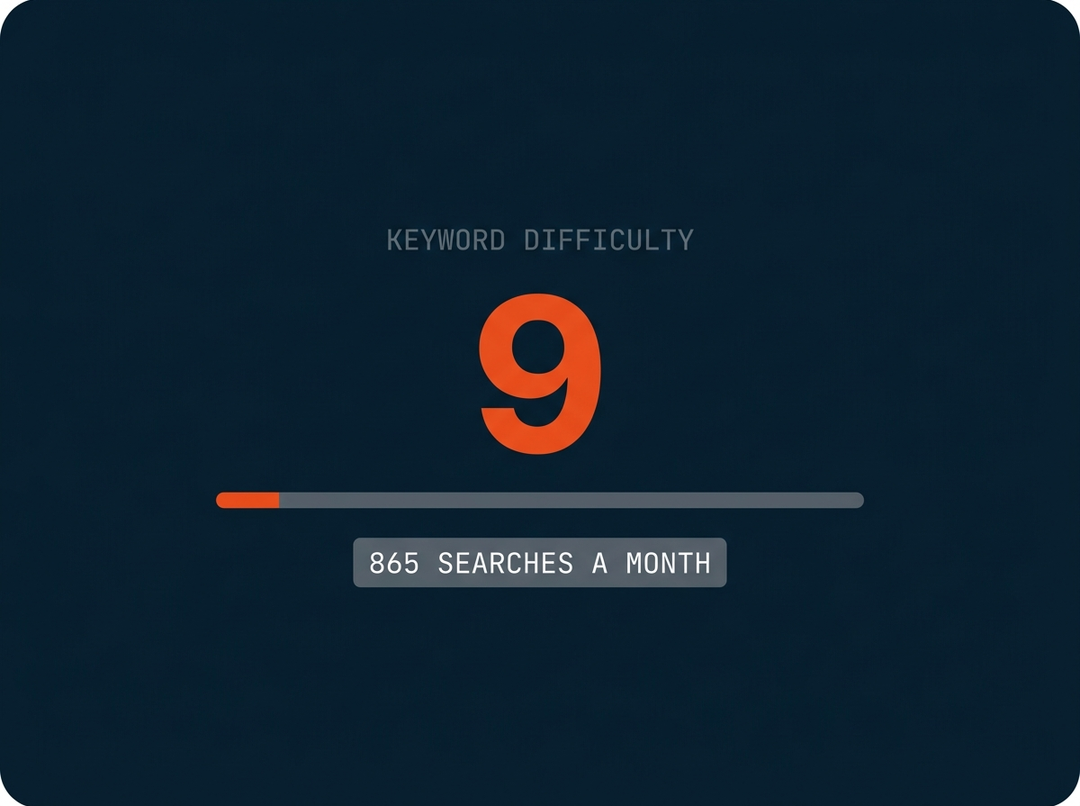
- The flagship page targets customer experience consulting: 865 searches a month, difficulty score 9, page one held by Bain, BCG, and COPC
- Eight commercial pages mapped to a primary keyword, a competitor word count, and the number of backlinks each one needs
- Ten supporting articles across three topic clusters, each linking to its pillar page inside the first two paragraphs
- Keyword assignments audited for cannibalization and re-pointed where a service page and an article competed for the same term
- Retail and e-commerce CX set as the year-one vertical. A quarterly review gates the second vertical.
An AI Visibility Baseline, Measured Before the Work Started
An AI visibility number is worth having only if you can re-run it the same way next quarter. We built the panel before the work started. The baseline is fixed, so the movement is measurable.
- 13 buyer questions run live across ChatGPT, Claude, Perplexity, Microsoft Copilot, and Gemini
- Baseline recorded at 0 of 14 answers, with the sources each engine cited instead
- The same 13 questions re-run every quarter against the same five engines
- Schema, FAQ structure, and llms.txt scoped for AI crawler ingestion and citation
- The October target set in advance: 3 of 14 answers, a first retail and e-commerce mention, and two source citations
What We Achieved

Discovery ran on June 19, 2026. The rebuilt homepage, About page, and four service pages went live on August 12, 54 days later. The remaining pages followed inside the week. In between, DAP delivered the month-one diagnostic, built conversion tracking, and wrote, designed, and developed every page in the set.

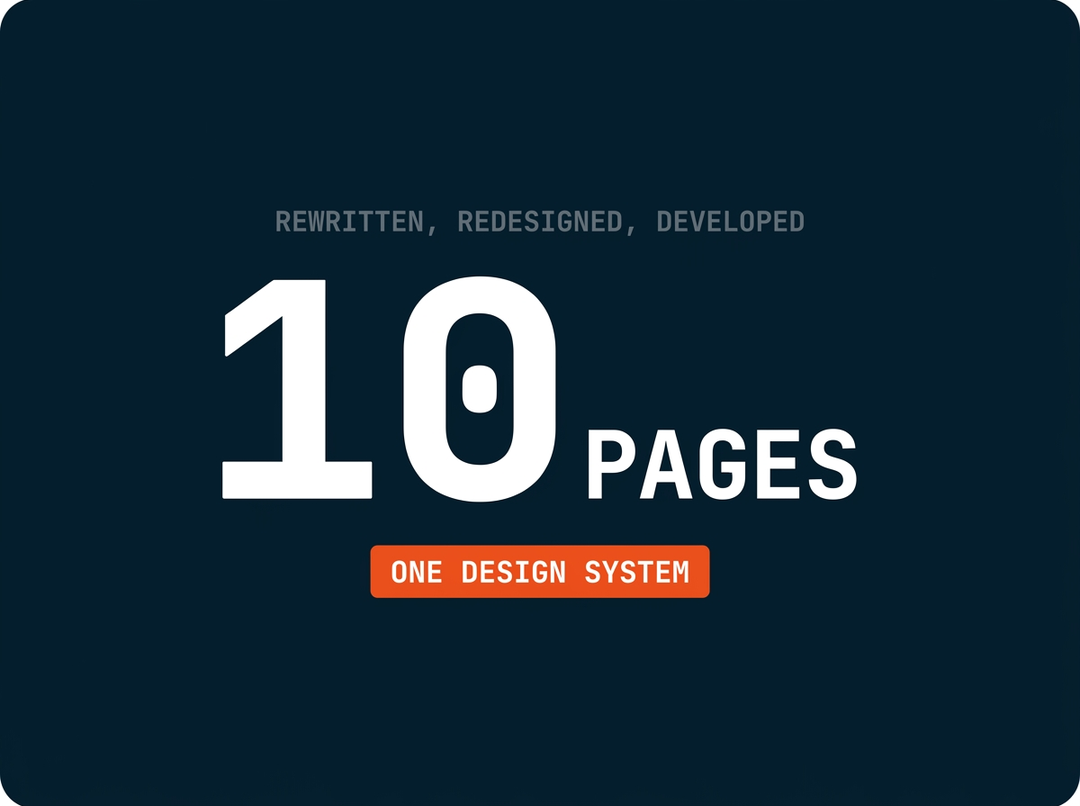
DAP rewrote, redesigned, and developed all ten pages on a single design system: the homepage, six service pages, About, Contact, and Our Partners. An author page with a named byline replaced organization-level attribution on the articles.

Conversion tracking went live and validated on July 7, 2026, built in Google Analytics and Google Tag Manager. Until then, Google Analytics recorded none of the site’s three form tools as a conversion. Contact and RFP form submissions became the tracked events, with a universal button tracker behind them. All of it landed before the rebuilt pages shipped, not after.

A technical audit with a prioritized fix register, a schema deployment spec, the SEO architecture and keyword priority map, an SEO baseline report, an analytics audit, an AI readiness audit, the GEO prompt-panel baseline, a backlink profile review, a brand communications guide, FAQ research and classification, and the 12-month production roadmap. All of it landed before we published a single page.

Two buyers submitted the contact form after launch, and ApexCX spoke to both. A third came from a real person at a real company. ApexCX’s COO credits the rebuilt site with getting them to fill in the form. This is a firm whose pipeline had never carried an inbound channel, and where a single won deal reaches six figures.