The Healthcare Reputation-as-Acquisition Playbook
What You Will Learn in This Healthcare Reputation Playbook
Every patient reads about you before they call your office. In 2025, 84% of patients checked online reviews before choosing a new provider, and 83% would not consider a provider rated below four stars. It takes roughly 40 positive reviews to offset the pull of a single negative one. The first appointment now happens on your review profile, and it happens without you in the room.
The organizations winning patients right now treat that profile as patient acquisition. They lift review volume on a schedule, keep their star rating high across locations, and earn the trust that turns a search into a booked visit. The practices still treating reviews as a front-desk afterthought are losing patients to the practice three miles away.
Most healthcare organizations sit in one of two places. Some leave reviews to chance and watch competitors capture patients they should be reaching. Others chase review volume without guardrails and risk HIPAA missteps in public replies. The organizations growing fastest have found the middle ground: they run reputation as an acquisition channel with compliance built in.
Patient behavior has moved again. Patients now ask ChatGPT, Gemini, and Google’s AI results for provider recommendations, and those tools build their answers from sources beyond your
website. Our AI Visibility Gap study found that 89% of the sources AI platforms cite point to third-party media. Your reviews, your Healthgrades profile, and the threads patients trust are the raw material AI uses to recommend you.
This playbook maps the exact system healthcare leaders use to turn reputation into patient volume across every place patients look. It covers the acquisition math behind a higher star rating, the post-visit workflow that lifts review velocity four to six times, the platform stack that converts booking intent by subvertical, and the AMA-aligned response patterns that protect the practice and the patient. It includes ready-to-use response templates, a profile completeness checklist, and a per-location reputation scorecard your team can run before every review cycle.
Playbook highlights

The 2026 Buying Reality
The numbers behind patient choice have moved. 84% of patients read reviews before they choose a provider, 83% require at least a four-star rating to consider you, and a single negative review takes roughly 40 positive ones to offset. This playbook breaks down what each shift means for patient volume and shows how to turn your review profile into the first appointment, the one that happens before a patient ever calls.

The Reputation Acquisition Math
A half-star moves the whole funnel. Star rating works at two simultaneous stages: it earns more clicks from the search result, and it converts more of those clicks into booked appointments. The playbook shows the worked model behind a 4.7-star practice that earns roughly twice the inquiries of a 4.2-star competitor at the same spend, with the click-through and conversion lifts broken out so you can run the math for your own market.

The AI Visibility Shift
Patients now ask AI for provider recommendations, and AI builds its answers from your reputation. Our original AI Visibility Gap study found that 89% of the sources AI platforms cite point to third-party media, and that healthcare runs especially cautious in AI search. This playbook shows how reviews, profiles, and trusted third-party content get surfaced and recommended by AI systems, and what to prioritize this quarter to show up there.

The Reviews and Platform Playbook
The operational core. The post-visit text workflow that lifts review velocity four to six times, the response cadence that signals an active practice to Google and to patients, and the photo and Q&A elements most providers leave empty. It maps Healthgrades and the full platform stack by subvertical, and it shows how Reddit threads now shape provider research in both search and AI results.

The HIPAA-Safe Response System
Respond with confidence and stay compliant. The playbook translates AMA guidance into clear boundaries for what a provider can say in a public reply, includes three ready-to-use response templates for positive and critical reviews, and gives you a crisis workflow for the day a viral review or a social-media incident threatens patient flow. Print the templates and make them the standard every reply follows.

The Case Studies
Real healthcare results behind the system. Oklahoma Interventional Spine and Pain: 293% more qualified calls. Stride Autism Centers: 4.25X organic traffic growth and 112 qualified leads in five months. Geode Health: number one Google rankings across 11 locations at 7X lower cost than paid. United Hospice: 73% more families reached. Athenahealth: 140% revenue increase. The playbook breaks down the reputation and local systems behind each result.
Peek Inside the Guide
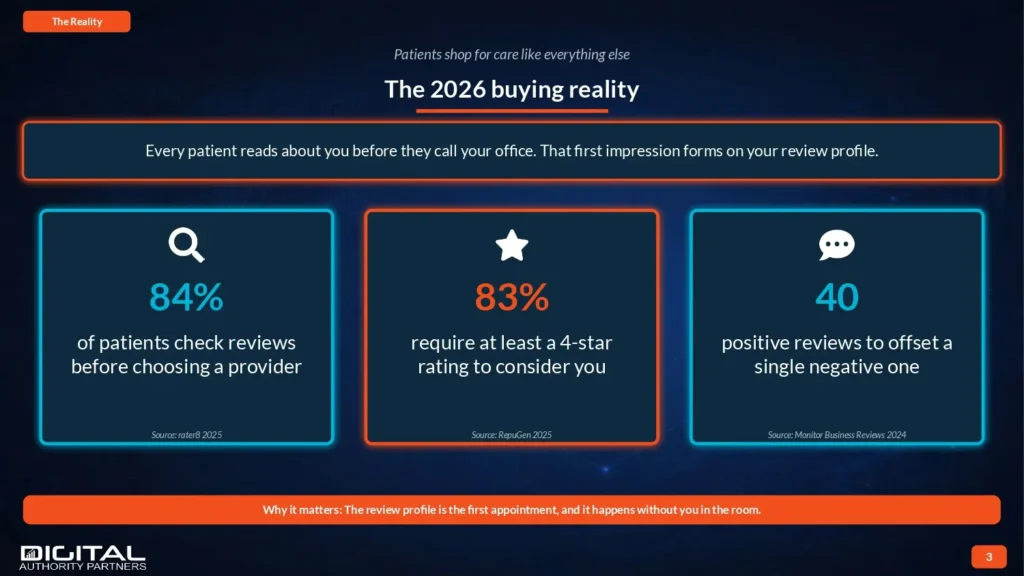
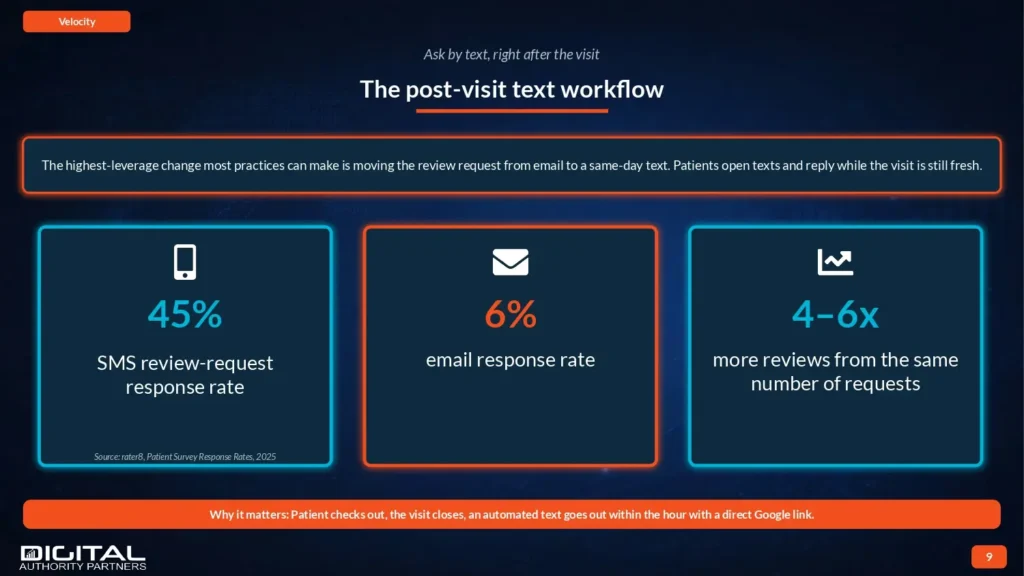
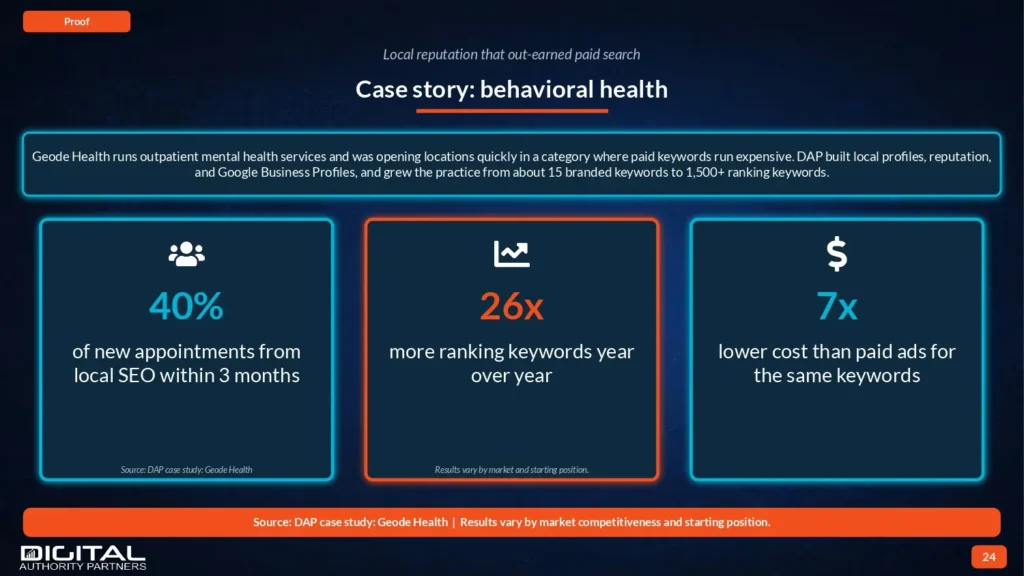
Table of contents
84% of Patients Read Reviews Before They Choose
83% Will Not Consider a Provider Below Four Stars
The Review Profile Is the First Appointment
How a Half-Star Moves Click-Through and Conversion
The 4.7-Star Practice That Earns Twice the Inquiries
Volume, Recency, and Replies That Compound
89% of AI Citations Point to Third-Party Media
Why Healthcare Runs Cautious in AI Search
How Your Reputation Becomes Your AI Visibility
The Post-Visit Text Workflow That Lifts Reviews 4-6X
The Response Cadence That Signals an Active Practice
The Photo and Q&A Elements Most Providers Skip
Why Healthgrades Converts Medical Booking Intent
The Profile Elements That Turn Views Into Appointments
The Platform Priority by Subvertical
Why Reddit Threads Now Rank in Search and AI
How Healthcare Brands Participate the Right Way
The Search and AI Visibility Payoff
What the AMA Guidance Lets You Say
Three Templated Response Patterns
The Boundary Between Policy and Protected Information
The First-Hour Response Workflow
Aligning Leadership and Front Desk on One Message
Restoring the Rating and the Schedule
Oklahoma Interventional Spine and Pain: +293% Qualified Calls
Stride Autism Centers: 4.25X Organic Traffic, 112 Leads
Geode Health: #1 Rankings Across 11 Locations
United Hospice: 73% More Families Reached
Athenahealth: +140% Revenue
Similar white papers

Therapy clients search with clear intent, and a well-run Google Ads account puts your practice in front of them at the moment they look for...
Someone searching “alcohol rehab near me” gets a Local Pack and no AI Overview. Someone searching “what is MAT treatment” gets an AI Overview that...

Google treats financial queries differently from every other vertical. The same system that writes confident overviews for recipes and travel applies stricter safety filters to...
Have questions about this white paper?
Let’s talk!