The Compounding Healthcare Retainer: Why Top Healthcare Brands Stay With DAP for Five-Plus Engagements
What You’ll Learn in This Compounding Healthcare Retainer Ebook
The healthcare brands that get the most from marketing share one trait: their engagement compounds. It starts in one service or one market, proves itself, and widens. Year two does more than year one. A second service builds on the first, and a second market reuses what the first one learned.
This guide shows you the pattern behind that growth. It maps the two ways healthcare engagements compound, the design choices that create the effect, the plain math behind a multi-year partnership, and the six questions that tell you whether an agency is built to compound before you sign.
- 11 locations ranking #1 on Google: Geode Health
- 132 #1 rankings across 10 Florida cities: Centella
- 70% share of voice: Symetria Recovery
Results drawn from DAP published healthcare case studies.
Six Things This Guide Will Help Your Healthcare Brand Do

1. Recognize the two compounding patterns
DAP healthcare engagements grow in two ways. Some clients deepen by stacking services over time. Others widen by scaling one playbook across many cities and practice areas. The guide shows both patterns with named client examples, so you can see what a compounding partnership looks like in practice.

2. See why most engagements reset before they mature
Project-based agencies average a 24-month client lifespan, while retainer agencies average 56 months (Focus Digital, 2026). A short engagement ends close to the moment results begin to build. The guide shows you how to pick a model that lasts long enough for the work to compound.

3. Understand the five design choices that make results stack
Compounding is a design outcome. Vertical depth, dedicated team continuity, a monthly delivery cadence, KPI ownership, and a governance rhythm turn each engagement into the platform for the next. The guide breaks down each one and how it builds on the last.

4. Run the compounding math for your own budget
The guide models one 24-month partner against two 12-month restarts on the same time and spend. You will see why a single unbroken engagement buys more compounding output than two ramps with a reset in the middle.

5. Diagnose agency fit with six questions
Six questions separate an agency built to compound from one built to churn. The guide gives you each question and the answer a compounding agency gives, so you can evaluate fit with confidence before you sign.

6. Apply DAP's healthcare engagement design principles
The guide closes with the principles that produce the pattern: specialize first, keep the team, ship monthly, own the KPIs, and govern the relationship. Use them as a checklist for any partner you consider.
Peek Inside the Guide
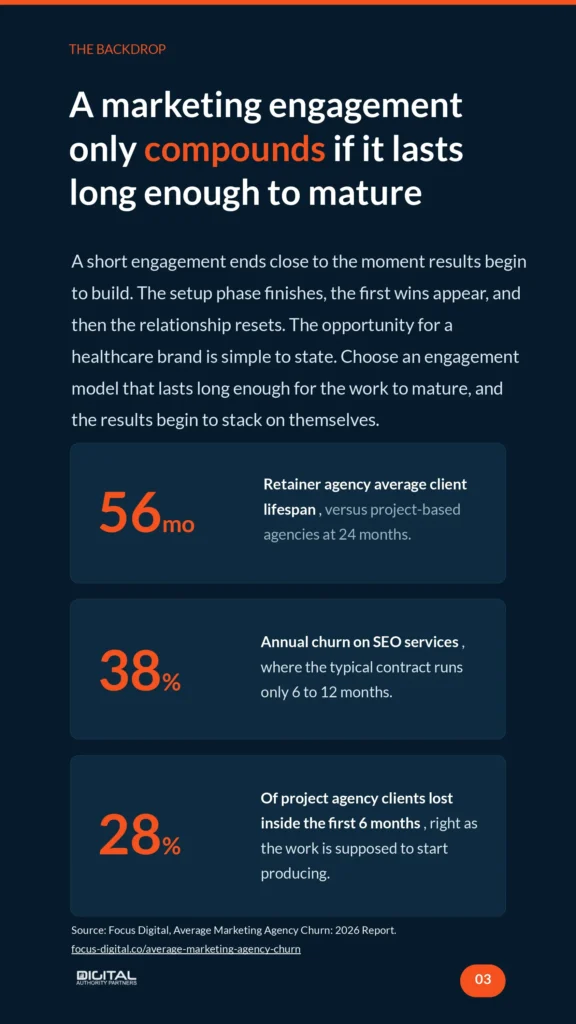
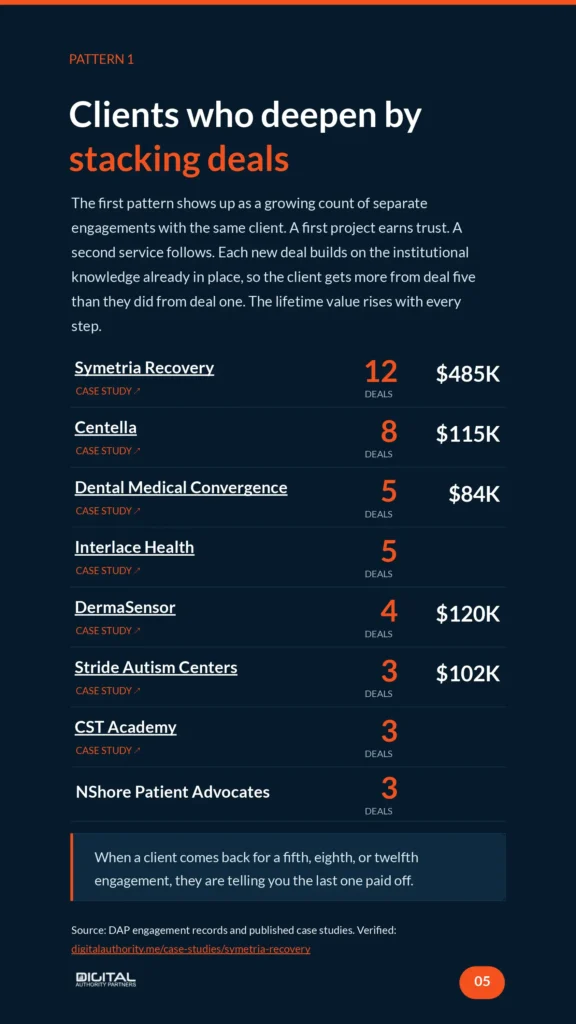
Table of contents
Why a marketing engagement only compounds when it lasts long enough to mature
The benchmark data on agency retention and what it means for healthcare brands
What a compounding partnership looks like in practice
Pattern 1: clients who deepen by stacking deals, with named client examples
Pattern 2: clients who widen by scaling one playbook across cities and practice areas
The shared engine: how both patterns turn one win into the platform for the next
The five engagement-design choices that make results stack
How continuity earns the next deal, in clients’ own words
One 24-month partner versus two 12-month engagements on the same time and spend
Where the cost of starting over shows up in the numbers
Six diagnostic questions to ask before you sign
The answer a compounding agency gives to each
The five principles that produce the compounding pattern
Similar white papers

Google treats financial queries differently from every other vertical. The same system that writes confident overviews for recipes and travel applies stricter safety filters to...

The Department of Justice moved the first Title II compliance date to 26 April 2027, which leaves eight months for public entities serving 50,000 people...
Most software evaluations finish somewhere a vendor does not control. 6sense measured 94% of buying groups ranking their vendors before speaking to a seller, with...
Have questions about this white paper?
Let’s talk!