The Health Technology Vendor Visibility Report: Healthcare Technology Marketing in AI Search
What You’ll Learn in This Healthcare Technology Marketing Whitepaper
Health systems shortlist their technology vendors well before procurement opens. In 2025, sixty US healthcare organizations made an acute care EHR purchase decision, 83% of technology buyers shortlisted three or fewer products, and 94% of buying groups ranked a preferred vendor before speaking to any seller. This report shows where that ranking forms and how healthcare technology marketing earns a vendor its place in it.
On August 3, 2026, Digital Authority Partners ran fifteen buyer-style prompts across patient intake, telehealth, clinical documentation, revenue cycle, and care coordination, then classified all 150 sources the engines displayed. Vendor-owned pages and independent roundup sites supplied 69% of them, review platforms supplied 12%, and KLAS Research reached 1.3%. Your team can earn a share of both leading source types this quarter, and the B2B Software AI Visibility Report extends the same method to software vendors in every category.
Three vendors selling to hospitals, health systems, and provider groups have seen these results with DAP:
- 132 #1 Google rankings across 10 Florida cities: Centella Health Technologies
- 57% improvement in average search position, from 35 to 15: Interlace Health
- Share of voice grown from 5% to 20% in its target market: Radix Health
Results drawn from published Digital Authority Partners case studies. Individual results vary.
Six Things This Guide Will Help Your Health Technology Team Do

1. See Where Your Buyer’s Shortlist Forms
Map the sources a health system reaches for while it builds its own evaluation criteria. The report traces how a small, countable number of real decisions each year meets a buying group that already holds a favorite before the first call, and it shows which surfaces shape that favorite across five health technology segments.

2. Win the Alternatives Question
The alternatives prompt produced a median list of twelve vendors, the widest entry point in the test, and roundup sites and review platforms supplied 35 of its 50 sources. Learn which pages earn a spot on that list and why this question reaches a buyer who holds a favorite and wants a second opinion before committing.

3. Check Your Review Platform Category This Week
A review platform’s alternatives page appeared on four of five alternatives prompts. The guide walks through a four-step check of your listing, your stated competitive set, and your category placement. Category placement is a correction your team files in an afternoon, and it shapes the answers engines give health system buyers about you.

4. Publish Your Analyst Standing and Clinical Evidence
KLAS and Black Book standing comes from the experience your customers report, an asset you already own. See how to publish that standing where engines read it, and why clinical evidence carried the most accurate answers in the test. One piece of research becomes three citable pages: the study, its methods page, and a plain-language version.

5. Write for the Whole Buying Committee
Content written for the whole buying group lifts consensus by 20%. The report breaks down what a clinical evaluator, a security reviewer, and a finance approver each look for on your site, and how public, dated compliance documentation answers a security gate that health systems tightened after the 2024 Change Healthcare breach.

6. Score Your Readiness and Run a 90-Day Sequence
Score twelve signals across owned, third-party, and evidence surfaces for a total out of 48, then read your band. The ninety-day sequence names an owner for each phase across marketing, medical affairs, security, and customer success, and it closes with a three-prompt rerun so your team sees which moves registered with the engines.
Peek Inside the Guide
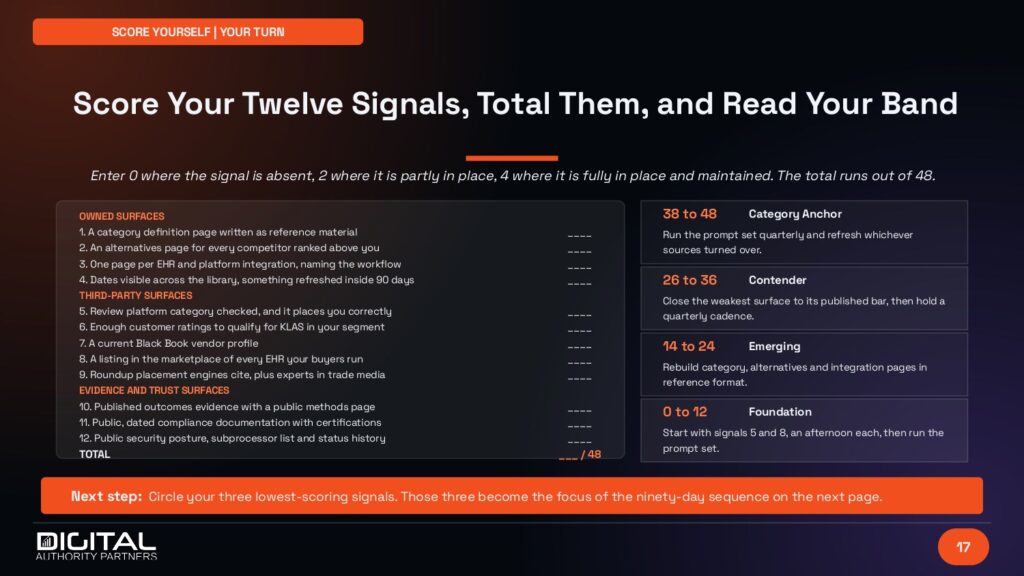
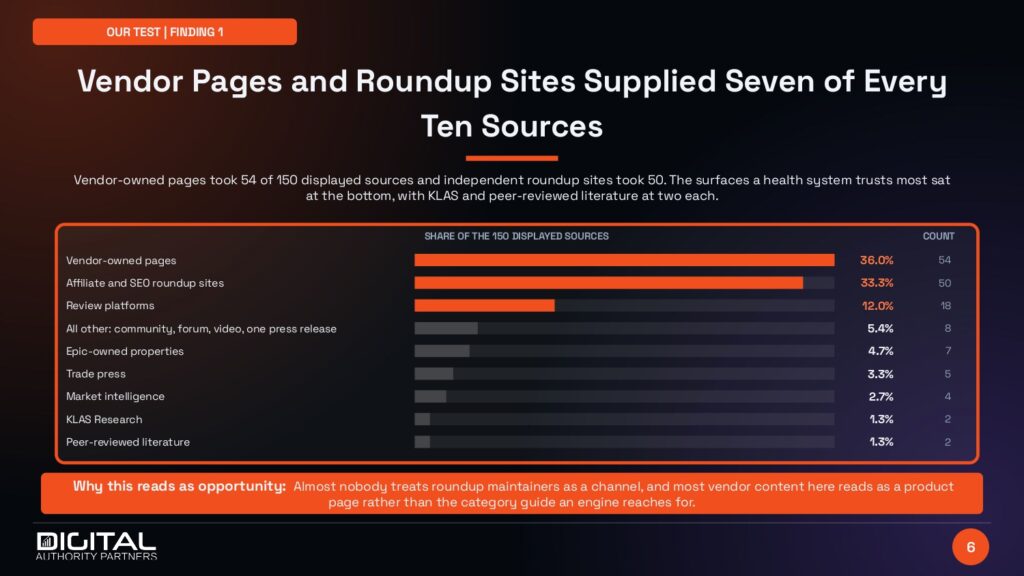
Table of contents
Why a category with few live decisions each year picks a favorite before anyone calls you
Where health systems want point solutions beside their EHR, in the words of two informatics leaders
How one evidence asset serves marketing, analyst relations, medical affairs, and security review
Fifteen prompts, five segments, three prompt shapes, two engines, and one day of captures
The full source mix, from vendor pages at 54 of 150 to peer-reviewed literature at two
Three prompt shapes with three gatekeepers, and two engines that named different vendors
The review platform listing check, with what we found across four observations
Patient intake, telehealth, clinical documentation, revenue cycle, and care coordination
How AI engines treat health questions and the room that leaves for vendors with citable material
Analyst standing, clinical evidence, and the format ladder from 497 scored pages
What each reader needs from your site, plus a one-page brief to forward to your executive team
The twelve-signal scorecard, the ninety-day sequence, a prompt set to rerun, and planning ranges
Similar white papers

Therapy clients search with clear intent, and a well-run Google Ads account puts your practice in front of them at the moment they look for...

Someone searching “alcohol rehab near me” gets a Local Pack and no AI Overview. Someone searching “what is MAT treatment” gets an AI Overview that...

Google treats financial queries differently from every other vertical. The same system that writes confident overviews for recipes and travel applies stricter safety filters to...
Have questions about this white paper?
Let’s talk!