McGraw Hill
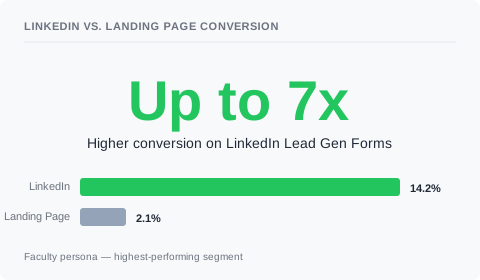
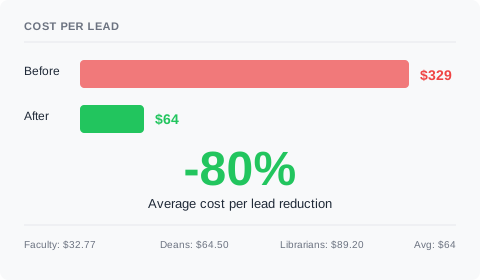
McGraw Hill competes in one of the most niche B2B markets out there: only 120 universities globally are viable prospects for their medical education products. That makes Account-Based Marketing the only strategy that makes sense. Before Digital Authority Partners came on, over $30,000 in LinkedIn spend had produced zero qualified leads. Previous ABM attempts had fallen flat. McGraw Hill’s own sales teams across three continents had stopped trusting marketing altogether. Digital Authority Partners identified LinkedIn as the clear channel winner, converting at up to 7x the rate of traditional landing pages. Cost per lead dropped from $329 to $64, and Digital Authority Partners built a repeatable ABM model that gave McGraw Hill’s leadership the confidence to invest further.
McGraw Hill is one of the largest educational publishers in the world, with 4,000+ employees across 30+ countries. Their medical education division promotes AccessMedicine, AccessWorldMed, Case Files, and Boards & Beyond to institutions across EMEA, LATAM, and APAC. The total addressable market is incredibly niche: roughly 120 universities globally. That kind of market needs Account-Based Marketing done right, not volume plays.


Project Summary
Before working with Digital Authority Partners, McGraw Hill had been running campaigns internally, but they weren’t really Account-Based Marketing. Messaging was generic, personas weren’t segmented, and nothing connected marketing activity to pipeline. McGraw Hill brought in Digital Authority Partners to fix that and prove marketing could actually generate qualified interest inside a buying cycle that runs 12 to 18 months and involves faculty, deans, librarians, and executive stakeholders. Through focused persona targeting, channel testing, content strategy, and a full analytics rebuild, Digital Authority Partners helped McGraw Hill go from zero qualified leads and $30,000 in wasted spend to a repeatable Account-Based Marketing model with up to 7x higher conversion rates on LinkedIn and cost per lead down from $329 to $64.


The Challenge
 Constrained Market
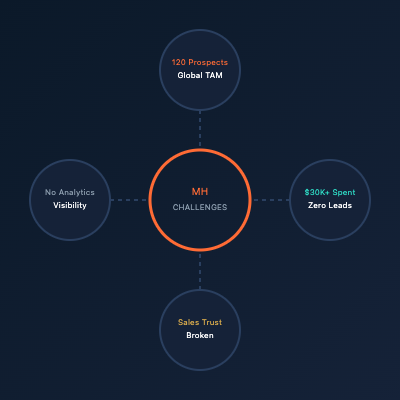
 Only 120 Viable University Prospects Globally
When your entire market is 120 universities, you can't spray and pray. Buying cycles run 12 to 18 months, involve faculty, deans, librarians, and executive stakeholders across four continents, and every dollar has to hit the right person at the right time. Volume-based marketing simply doesn't work here. This is exactly the kind of niche market where Account-Based Marketing is the only viable strategy.
 Failed Ad Spend
 Zero Qualified Interest from $30,000+ in LinkedIn Spend
More than $30,000 had gone into LinkedIn with nothing to show for it. The money was being spent, but no one could tell whether the problem was targeting, messaging, creative, or the platform itself. Leadership was flying blind.
 Sales-Marketing Breakdown
 Sales Teams Across Three Continents Lost Trust in Marketing
Sales teams in Europe, Latin America, and the Middle East had written off marketing entirely. Leads were ignored. Arguments about lead quality went in circles. The two teams weren't aligned, they were barely talking.
Broken Analytics Marketo Configured but Not Producing Insight
Marketo was technically in place, but it wasn't doing much. Tracking was inconsistent, nothing connected across platforms, and leadership had no way to see whether marketing was actually contributing to sales. Without that visibility, every decision was a guess.
How we Helped McGraw Hill
Focused Account-Based Marketing Strategy with Persona Prioritization
We made a call early on that raised some eyebrows: stop trying to talk to everyone at once. Faculty, deans, and librarians all matter in the buying process, but hitting them all with the same message at the same time wasn’t working. We picked faculty as the lead persona and built the entire strategy around that bet first.
- Led with faculty as the primary persona based on how the buying cycle actually plays out at these institutions
- Built separate campaign tracks for faculty, deans, and librarians so each got messaging that spoke to their actual priorities
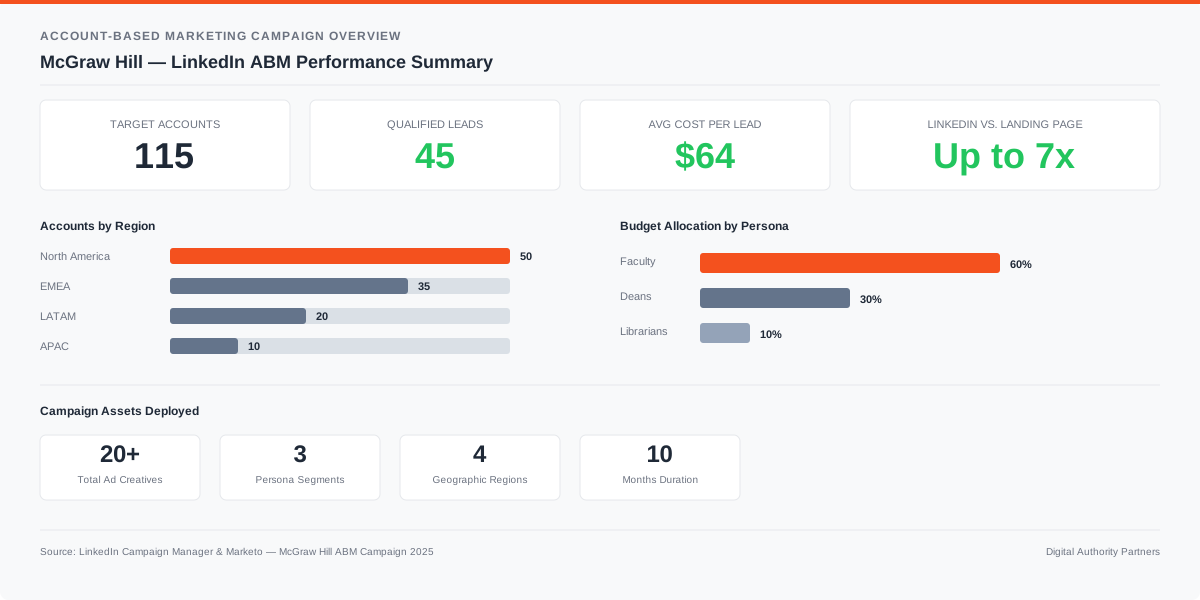
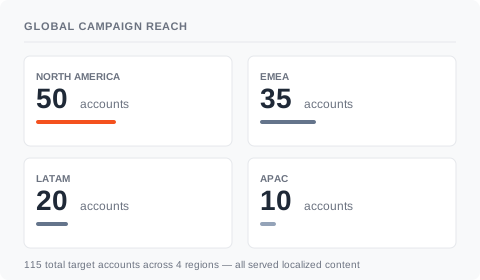
- Targeted 115 accounts across 4 regions: LATAM (41), Europe (35), MEA (30), APAC (9)
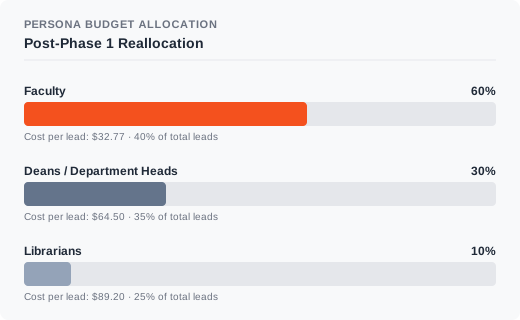
- Shifted budget based on what was working: 60% Faculty, 30% Deans, 10% Librarians after Phase 1 cost-per-lead data came in
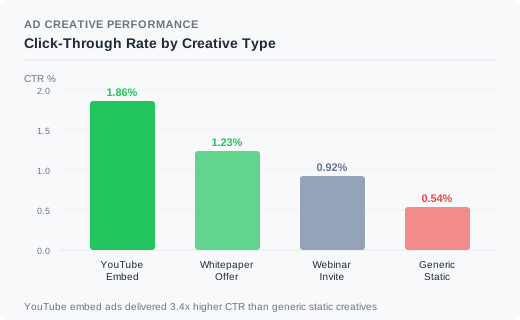
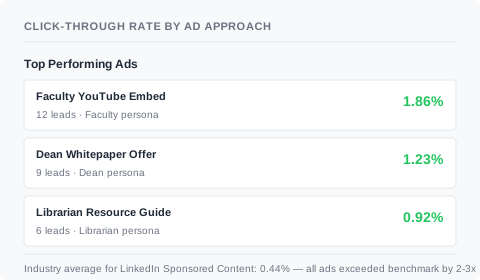
- Found that YouTube-style pain-point messaging outperformed everything else by 2-3x on click-through rate
Persona-Specific Content and Creative Strategy
Instead of generic McGraw Hill messaging, we built 20+ creative assets that spoke directly to how each persona thinks about digital learning. Faculty don’t respond to “digital transformation” talk. They respond to the stuff they’re actually dealing with.
- Wrote the whitepaper "Beyond Traditional Textbooks: Meeting Medical Students Where They Learn Today"
- Created ads referencing YouTube that crushed generic "digital learning" messaging by 2-3x on click-through rate
- Built three landing pages tailored to different personas and ran A/B tests through LinkedIn forms
- Developed Spanish creative, landing pages, and email nurture for Latin America after the data showed strong top-of-funnel engagement in that region
- Mapped out a 6-asset content journey taking prospects from problem awareness to conversion readiness
Marketo Rebuild and Marketing Automation
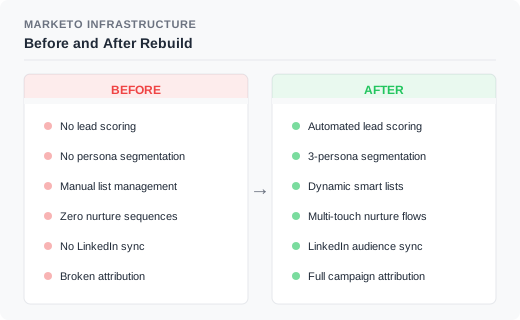
Marketo was supposed to be the engine behind everything, but it was barely running. We tore it down and rebuilt it into something that actually worked, with real tracking, proper workflows, and analytics people could act on.
- Rebuilt the Marketo configuration with proper tracking, lead scoring, and funnel conversion metrics
- Created 6-email nurture sequences tailored by persona: ebook download, webinar invite, masterclass takeaways, product videos, testimonials, and book-a-call
- Set up email performance dashboards and a regular review cadence with leadership
- Flagged medium-to-high engagement contacts for direct sales outreach on LinkedIn
- Built an attribution model so leadership could finally see which touchpoints were actually driving pipeline
LinkedIn Campaign Optimization and Channel Testing
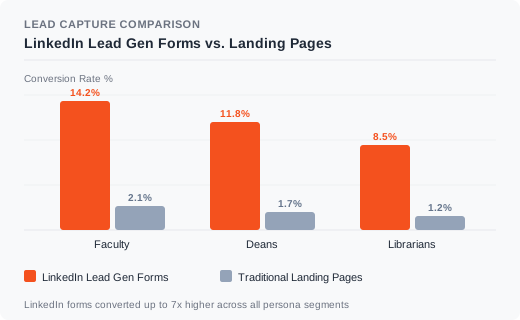
We ran LinkedIn’s native Lead Gen Forms as a standalone test against traditional landing pages to find out which lead capture method was actually converting. The answer was decisive, and it changed how the entire budget was allocated going forward.
- Ran a head-to-head test: LinkedIn Lead Gen Forms vs. traditional landing pages
- LinkedIn won by up to 7x on conversion rate, and we moved budget accordingly
- Managed LinkedIn campaigns across LATAM, Europe, MEA, and APAC with region-specific targeting
- Achieved a $32.77 cost per lead for the faculty persona, the lowest across all personas, with faculty generating 40% of total leads
- Reached 44 accounts in Phase 1 (20 planned plus 24 additional), with LATAM leading at 19 accounts
What we Achieved

We tested LinkedIn’s native Lead Gen Forms against traditional landing pages to find out which lead capture method was actually converting. The results weren’t close. LinkedIn leads moved through the funnel at 3 to 7 times the rate, depending on the persona being targeted. This wasn’t about which had a cheaper cost per lead. It was about which channel produced people who kept engaging. That insight changed where the entire budget went.

Cost per lead went from $329 to $64, and the leads were better, not worse. Tighter targeting and sharper messaging meant we were reaching the right people instead of paying to reach everyone. Faculty leads came in at $32.77, the lowest cost per lead across all personas.

Ads that talked about YouTube and student disengagement beat generic “digital learning” language by 2 to 3x on click-through rate. The top ad, “Brilliant Professors. Empty Classrooms.”, pulled 20 leads on its own. Turns out, specific pain points outperform generic benefits every time, across every persona and region.

We built the Account-Based Marketing program across 115 accounts in four regions: LATAM (41), Europe (35), MEA (30), and APAC (9). LATAM surprised everyone by leading in engagement even with English-only assets. Once Spanish localization rolled out, response was projected to jump 3x.
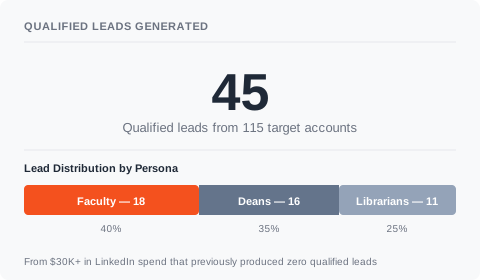
After we cleaned out duplicates and off-target contacts, the campaign delivered 45 qualified leads. Faculty accounted for 28 (62%), Deans brought in 8, and Librarians generated 9. Keep in mind, this was a proof-of-concept phase on a tight budget. But it was enough to restore executive confidence and unlock the next phase. The engagement is now in its second year, with Digital Authority Partners managing campaigns across Europe, Latin America, and the Middle East.