
Multi-Location Marketing Management With Franchise FCMO
Running a franchise involves establishing your brand or business in multiple locations. However, when you have more than one location to manage, creating a consistent and effective marketing plan becomes increasingly challenging.
This is where hiring fractional CMO services for franchises can be highly beneficial. A fractional CMO is a part-time marketing professional who creates standout marketing campaigns. As a result, you can enjoy a steady stream of customers right through your front doors.
This helpful guide to multi-location marketing management with a franchise FCMO is what you need. We cover all the essential tips and tricks you can apply to your future franchise marketing initiatives.
What Is Multi-Location Marketing?
Multi-location marketing, also known as multi-unit marketing, is a location-based marketing strategy that focuses on promoting multiple branches of a single leading brand or business. For example, McDonald’s has numerous locations worldwide, and each location employs specific marketing strategies tailored to the local audience in that area.
A multi-location marketing plan considers several factors to ensure success. These include:
- Local market
- Local audience preferences
- Specific cultural nuances
- Local competitors
This is where a fractional CMO can provide their expertise. Because they have a clear understanding of local markets, FCMOs are ideally positioned to provide guidance and expertise to small businesses and franchises.
Fractional CMOs are also proficient in various digital marketing platforms, such as SEO, email marketing, social media, and pay-per-click advertising. All of these are practical examples of multi-location marketing that reaches broader audiences and increases conversions and foot traffic.
That’s why multi-location marketing management with franchise FCMO is essential for driving both reach and relevance.
What Are the Advantages of Location-Based Marketing?
Location-based marketing provides many benefits to companies, such as the following:
- Increased Brand Awareness: The right marketing campaign ensures that your brand is consistently at the forefront of customers’ minds in various locations. The more effective your campaigns are, the more customers will search for your business, regardless of where they’re located.
- Targeted Campaigns: Multi-location marketing utilizes highly targeted, localized campaigns to speak directly to local audiences, ultimately leading to increased customer loyalty.
- Greater Visibility and Local SEO: Local marketing efforts, such as creating a Google Business Profile, increase your brand’s online visibility. This helps you rise above your competitors and ensures customers don’t have to search far and wide for your business.
- Improved ROI: Location-based marketing that’s relevant and answers the consumer’s needs in all franchise locations leads to higher returns on investment.
What Are the Disadvantages of Location-Based Marketing?
Location-based management is anything but easy. There are some challenges to take note of, such as:
- Budgeting and Resources: Allocating marketing resources across all locations can be challenging. This is where the franchisor provides additional support to their franchisees, whether in the form of marketing tools, budget, or resources.
- Communication Issues: Effective communication is key among the main franchise business and its locations to achieve a unified marketing experience. Consider using open communication tools and protocols to keep all locations informed about any marketing-related matters.
- Localization: A marketing strategy that works in one location may not be effective in another. This is where you have to tailor each plan to each location and avoid using a one-size-fits-all approach.
- Data Management: Managing data can be challenging, especially when each location has its unique systems. In this case, adopt a centralized data management system to access data from all locations.
With multi-location marketing management with franchise FCMO, open protocols, and standardized messaging helps bridge communication gaps.
Franchise Marketing Explained by a Franchise FCMO
Franchise marketing is a collaborative process between the franchisor (the central business entity) and the franchisee (the individual responsible for operating the company in a specific location). They work together to promote the leading brand and drive awareness via traditional or digital channels.
This collaboration benefits tremendously from multi-location marketing management with franchise FCMO, which helps align goals across locations. Franchise marketing can be categorized into two main types: operational franchise marketing and franchise development marketing.
- Operational Franchise Marketing: This type focuses on the promotions and marketing initiatives of a singular franchise location. This type aims to drive physical and online traffic to the business’s location in their local area.
- Franchise Development Marketing: On the other hand, this type focuses on the marketing of the main business as a whole. This type of marketing targets local franchisees or business owners seeking to operate their own franchise locations.
What Type of Marketing System Is Franchising?
Franchise marketing follows a contractual vertical marketing system. A vertical marketing system is when producers, wholesalers, and retailers work together under one common goal. In this setup, one main company controls the entire process of producing and selling products.
These companies are bound by a contractual agreement that stipulates they will meet common goals regarding costs, scheduling, products, and other matters. They still retain control over their managerial practices. In the case of franchising, each company is responsible for its own procedures, workflow, budget, and other aspects.
What Are the 4 P’s of Franchising?
Understanding the four P’s (Product, Price, Place, Promotion) is crucial for ensuring franchising success. Let’s dive into the four P’s and how they play a significant role in franchising.
Product
When it comes to franchising, your products are what will set you apart from the competition. Franchising presents a unique opportunity to promote your products and replicate them in multiple locations. A consistent product offering is a key goal of multi-location marketing management with franchise FCMO.
With the help of a fractional CMO, you can determine your product’s unique selling proposition; what unique advantages does it bring that others don’t have? Is it a specific feature? Is it competitive pricing? Or is it something that can only be found in your business?
Once you’ve identified your unique selling proposition (USP), communicate it to your audience through various communication channels. This is where market research comes in handy, as it helps you determine your audience’s unique preferences and tailor your product to meet these needs.
Regardless of which location your brand is in, the product should be consistent. To achieve this, establish clear quality control standards and training programs for all franchisees to ensure the highest quality for all products across all branches. This strategy also applies to customer service, presentation, and the overall customer experience.
Price
The price covers the cost of your product, franchise fee, and ongoing royalties. To ensure a fair and balanced deal between the franchisee and franchisor, consider the franchisee’s initial investment and what they receive in return. This also includes training, onboarding, and ongoing support.
Apart from the franchise fee, the franchisee must also pay ongoing fees and royalties. These fees represent a portion of the revenue and cover expenses such as marketing, training, and support. Before entering the franchise agreement, the franchisee should be aware of the fee structure and the potential profit.
On the franchisor’s side, they should carefully determine a fair and reasonable percentage for the ongoing fees and royalties. It should be sufficient to cover the necessary expenses, such as training and support, while also ensuring a positive profit margin. Effective multi-location marketing management with franchise FCMO ensures fair pricing strategies are rolled out across all locations.
Place
Choosing a location for your franchise involves several key factors, including the local market, accessibility, and foot traffic. Research your location beforehand to get an idea of the local population and the potential traffic. Consider regional competition, as this provides insights into market saturation and likely demand for your business.
Choose a location with high foot traffic, such as a mall or other public areas, as this helps ensure a consistent flow of customers. This location should also be accessible via private or public transportation to make it more convenient for customers. This ties directly into multi-location marketing management with franchise FCMO, which helps select and activate strategic locations.
Choosing a location involves choosing more than just the physical location. You also have to consider the surrounding environment. For example, a franchise located in a relaxing and peaceful environment is more likely to attract customers. Remember to consider amenities such as parking, nearby facilities, infrastructure, and more.
Promotion
Promotion involves both traditional and digital marketing efforts, such as word-of-mouth, social media marketing, local promotions, and more. Develop a branding strategy to help establish your brand’s identity across all locations.
As a branding expert, a fractional CMO can help you create a compelling story, identify your core values, and craft your brand’s mission and vision statements.Branding also involves visual elements like logos, colors, graphics, etc.
All of these elements come together to create a unified image of your brand that sets you apart from the competition. All these branding elements should be consistently applied to all marketing materials to build brand recognition.
How Does Franchise Marketing Work?
Franchise marketing involves strategies connecting online and offline marketing to promote your brand. This can be done using a variety of methods, such as:
- Traditional Word of Mouth: Spreading the word of your business and encouraging customers to do the same is a great way to get more people talking about your brand and convincing them to visit.
- Social Media Marketing: Utilize social media to connect with and engage your customers. This can be achieved through regular social media posts, such as updates, reels, and stories, as well as personally responding to messages and comments.
- Local SEO: Create a Google Business Profile to increase your brand’s visibility in your local area. This makes it easier for locals to find when they do a quick Google search.
- Pay-Per-Click Advertising: Paid ads appear at the very top of the search engine, increasing your website’s visibility and giving an early boost of traffic. Pair these ads with custom landing pages and a clear call to action to encourage more customers to make a purchase. Learn the secrets to a successful PPC campaign in this helpful guide.
What Is a Franchise DMA?
A franchise designated marketing area (DMA) refers to a geographic area that shares a media market, such as TV and radio ads. In other words, it’s the area where residents receive the same local television and radio advertisements. This is where multi-location marketing management with franchise FCMO helps reduce duplication and maximize ROI.
In terms of franchising, franchise advertisements are frequently bought for whole DMAs and displayed to these audiences. For example, instead of starting marketing your new fast food chain location from scratch, it’s easier to piggyback off the efforts of an existing franchise location within the same DMA. DMAs help reduce advertising costs and help establish territory borders.
How Do You Identify a Good Marketing Location?
When trying to scope out locations for your franchise, consider the following factors:
- Demographics: What are the demographics of the area, and does it reflect your target audience? (Age range, income levels, lifestyles, etc.)
- Accessibility: The location must be accessible via public or private transportation to provide ultimate convenience for the customer. Essential factors like parking, GPS navigation, and clear signage should also be considered.
- Foot Traffic: A public and bustling location is ideal for foot traffic, especially in the restaurant industry.
- Local Competition: Select a strategic location where your business will be in high demand but not overwhelmed by competitors. Additionally, assess your competitors as well, including their strengths and weaknesses, prices, services, etc.
- Real Estate Costs: Select a location that strikes a balance between accessibility and affordability. Cheaper places are less likely to attract customers, while expensive ones can offset revenue.
- Growth and Development Opportunities: It’s always better to choose a location that will sustain your business long-term. For example, look for areas with large and continuously growing populations.
How to Determine Franchise Territory?
Determining a franchise territory involves thorough market research and several key factors that will impact the business’s overall performance. These include:
- Population: Determine the minimum and maximum threshold for each territory to ensure you have enough customers to sustain the business. Higher-populated places mean more customers but greater competition.
- Geographic Boundaries: Use mapping technology to determine the ideal territory and define specific territorial characteristics. This also helps set boundaries and prevent overlap with neighboring regions.
- Local Factors: Consider local factors such as local traffic, accessibility, neighboring facilities, and other characteristics specific to the location.
8 Tips: Multi-Location Marketing Management With a Franchise FCMO
Let’s review eight helpful fractional CMO tips for multi-location marketing management in franchises.
1. Set Clear Brand Guidelines
When you have multiple locations of your business, maintaining a consistent branding experience can be challenging. To establish a consistent brand across all locations and platforms, have a branding style guide on hand. Think of this as your branding handbook that outlines all branding-related elements about your business.
Be as specific as possible when detailing your brand’s key messages, logos, colors, tone of voice, core values, etc. For example, instead of just simply stating your brand’s logos and colors, write their specific hex codes, various size options (thumbnail size, banner size, etc.), specific fonts, and so on.
A brand guide helps you maintain consistency and sets you apart from your competitors. This highlights brand-specific elements that other brands don’t have, attracting more customers and maintaining a strong brand reputation.
2. Centralize Marketing Assets and Customer Data
Managing customer data from various locations can be challenging, especially if you don’t have a dedicated system in place. Fortunately, you can remedy this by utilizing a centralized digital asset management (DAM) system for easier data access and collaboration.
Digital asset management is the process of storing and retrieving digital files, including marketing materials, images, videos, and documents. This helps achieve consistent branding and standardization of assets.
When selecting a DAM system, choose one that features a centralized repository for all marketing assets. Ensure security by implementing role-based access control, allowing only authorized users to view, edit, and remove files.
3. Create Custom Localized Content

Content that resonates with your local audience is more likely to engage customers and persuade them to visit your store or website. This type of content can include local promotions, customer testimonials, videos, and more. Your content should reflect local culture and address the needs of your local audiences to be relatable and compelling.
For example, you can create social media posts to update customers on the latest deals and promotions, which are exclusive to your local branch. User-generated content is also highly effective in promoting your business, including reviews, blogs, vlogs, and social media posts.
Nine out of 10 customers are likely to choose your business after reading reviews about it from others. Encourage customers to leave reviews and showcase these on your website as social proof and establish credibility.
4. Write Specific Landing Pages
When running paid search ads, your users should be directed to the appropriate landing pages. For example, if they click on your link expecting to book an appointment, direct them to the landing page that allows them to do just that with no hassle.
Each landing page should also be location-specific. Write your landing pages with the appropriate location, branch, address, phone number, call to action, and other important information that will help your users. Do this with every location to maintain consistency.
The same applies to eCommerce stores. An eCommerce fractional CMO can help you write the appropriate store pages, complete with product details, descriptions, reviews, prices, etc.
5. Improve Your Local SEO & Google My Business Profile
Local SEO is a massive part of marketing your local franchise. It all starts with targeting hyper-specific, location-based keywords that improve your business’s visibility and put you a step ahead of the competition.
For example, if you run a restaurant in Chicago, focus on long-tail, Chicago-based keywords to increase your chances of appearing in the search results. Your keywords might look like this:
- Affordable restaurants in Chicago
- Best family-friendly restaurants in Chicago
- Fast food restaurant near me
- Fine dining restaurants in Chicago
- Where’s the best place to eat in Chicago?
Apart from targeting local keywords, create and optimize your Google Business Profile (GPB). A Google Business Profile tells the search engine that your business exists and makes it easier for users to find.
When creating your GBP, make sure all details are complete and accurate. These include:
- Company name
- Company address
- Phone number
- Operating hours
- Service areas
- Business category
- Reviews and ratings
- Photos (Interior and exterior)
If your business changes any of these details (such as having a new phone number or relocating to a new address), please update your details immediately. Google prioritizes businesses with complete and consistent information across all local listings. Even the tiniest difference in spelling, punctuation, or capitalization can affect your search rankings.
6. Run Geotargeted Paid Ads
Geotargeted ads utilize location targeting to send alerts or notifications to local audiences whenever they enter a specific geographic perimeter. It’s an effective way to reach people in a particular area and present them with unique offers and deals.
When setting up paid geotargeting ads, target the areas where your business operates. If you run a business in Chicago, target Chicago and other cities in Illinois for your ad to be seen by Chicago residents. This also ensures that you’re paying for high-value clicks.
Similarly, avoid targeting locations outside of your target location. This prevents paying for clicks from users outside of your location. You can use tools like Google Trends to identify locations with the highest potential for conversion.
7. Monitor Local Reviews and Reputation
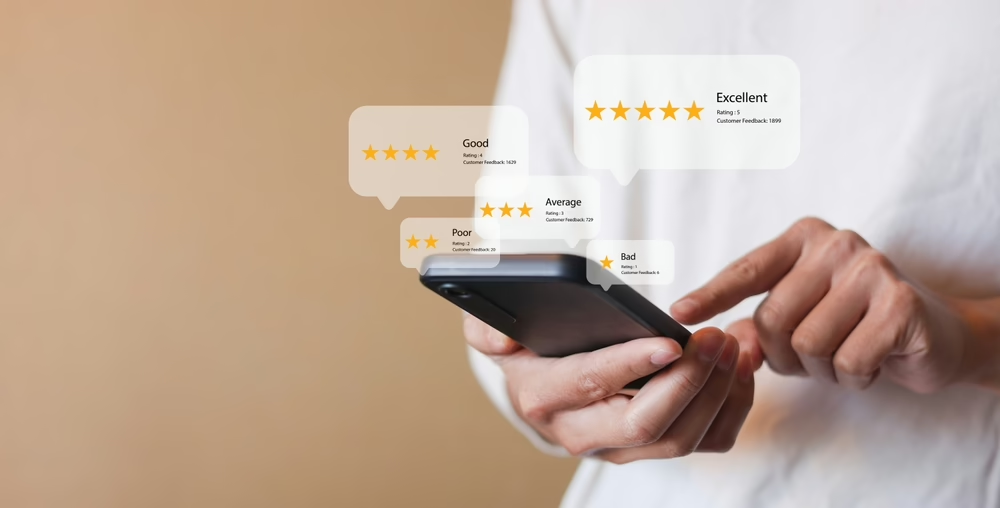
Maintaining a strong brand reputation is key to retaining loyal customers and staying competitive. In addition to encouraging customers to leave reviews, it’s also essential to monitor them and respond to them to maintain your reputation.
Responding to customer feedback helps establish accountability and shows customers that you value their input. Managing your reputation also involves monitoring brand mentions, comments, and overall brand sentiment.
To achieve this, utilize social listening and media monitoring tools to stay informed about what people are saying about your brand. These tools help track mentions, hashtags, brand interactions, and social media posts.
8. Partner With Local Businesses and Influencers
When trying to establish your footprint in your local community, who better to help than local businesses and influencers? You can reach out to local businesses and seek out any sponsorship opportunities or regional events that you can host or co-host.
This is a good opportunity to build strong relationships with other companies through mutually beneficial events.
Meanwhile, local influencers help raise brand awareness by promoting your business to their large followers. Since influencer marketing can be quite costly, an alternative solution is to partner with micro-influencers who have smaller but more niche follower bases. This ensures that you reach the right audience and save costs.
Talk to a Franchise Marketing Agency Today
The franchise industry is highly competitive, making it challenging for growing businesses to establish their presence and attract the customers they deserve. Fortunately, a professional franchise marketing agency like Digital Authority Partners is precisely what you need.
Digital Authority Partners aims to attract more customers and franchisees to your business. With our specifically tailored multi-location marketing management and franchise FCMO strategies, you can enjoy higher royalties and expand your reach to more locations.
We have experience helping brands in diverse industries with a broad spectrum of services that’ll increase growth and revenue, from brand management to SaaS content marketing.
Contact us today to implement powerful, proven strategies for multi-location marketing management with franchise FCMO expertise.
Want To Meet Our Expert Team?
Book a meeting directly here

Related Articles
Attracting high-value accident cases depends on two things — how visible your firm is when it matters, and whether yo...
Scaling a business in Chicago comes with unique challenges. The city’s competitive market pushes companies to m...
Picture this: Your marketing team crafts what they believe is the perfect campaign. The messaging sparkles and the de...