10 Best Mental Health Apps Worth Downloading in 2026

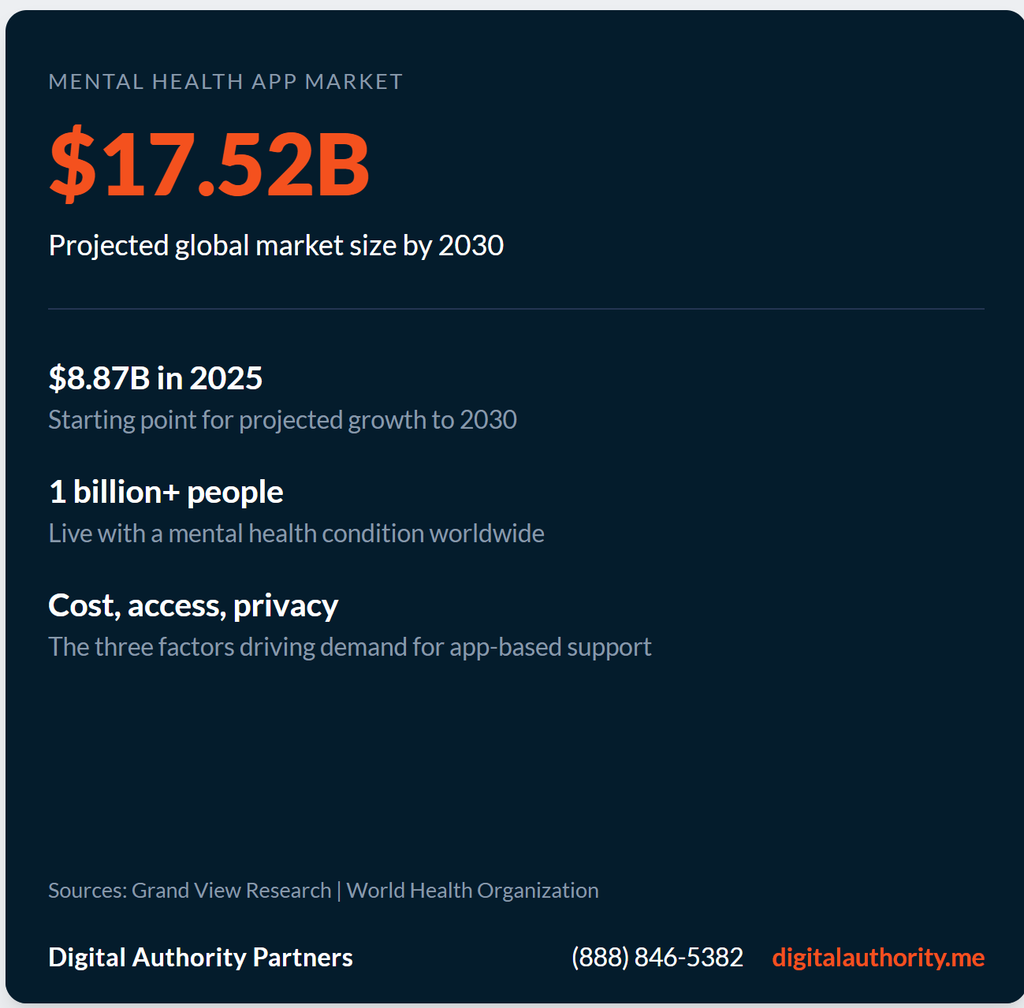
Your phone can walk you through a panic attack faster than most clinics can return a call. More than one billion people now live with a mental health condition, according to a World Health Organization 2025 report, and waitlists have not caught up with the demand.
Mental health apps close that gap, putting evidence-based tools for anxiety, mood, sleep, and stress right in your pocket, often at no cost. This guide ranks 10 of the best mental health apps to download in 2026, shows what each one does well, and helps you choose the right fit. As a healthcare digital marketing agency, we also explain why these products keep winning loyal users.
Why Are Mental Health Apps So Popular Right Now?
Demand for digital mental health support keeps climbing fast. The global mental health apps market reached roughly $8.87 billion in 2025 and is on track to hit $17.52 billion by 2030, according to a Grand View Research market report. Anxiety and depression remain among the most common conditions worldwide, and millions still wait months for an appointment.
A significant factor behind the popularity of mental health apps is that they fill the space between scheduled visits. They give you a tool for coping when anxiety strikes at 2 a.m. when the clinic is closed. Mental health apps also sit alongside a wider wave of best healthcare apps for patients that bring care closer to home and make support feel routine rather than rare.
Cost and access drive much of the demand. Therapy waitlists stretch for weeks in many regions, and a single session can cost more than a month of app access. A well-built app will not replace a clinician, yet it gives you a first step you can take today. That immediacy, paired with privacy and low cost, explains why downloads keep climbing across every age group.
What Are the Best Apps for Meditation and Sleep?
Meditation use among U.S. adults nearly tripled in five years, moving from a wellness niche into a daily habit for millions. The three apps below lead the category for guided sessions, sleep support, and beginner-friendly design.
Headspace
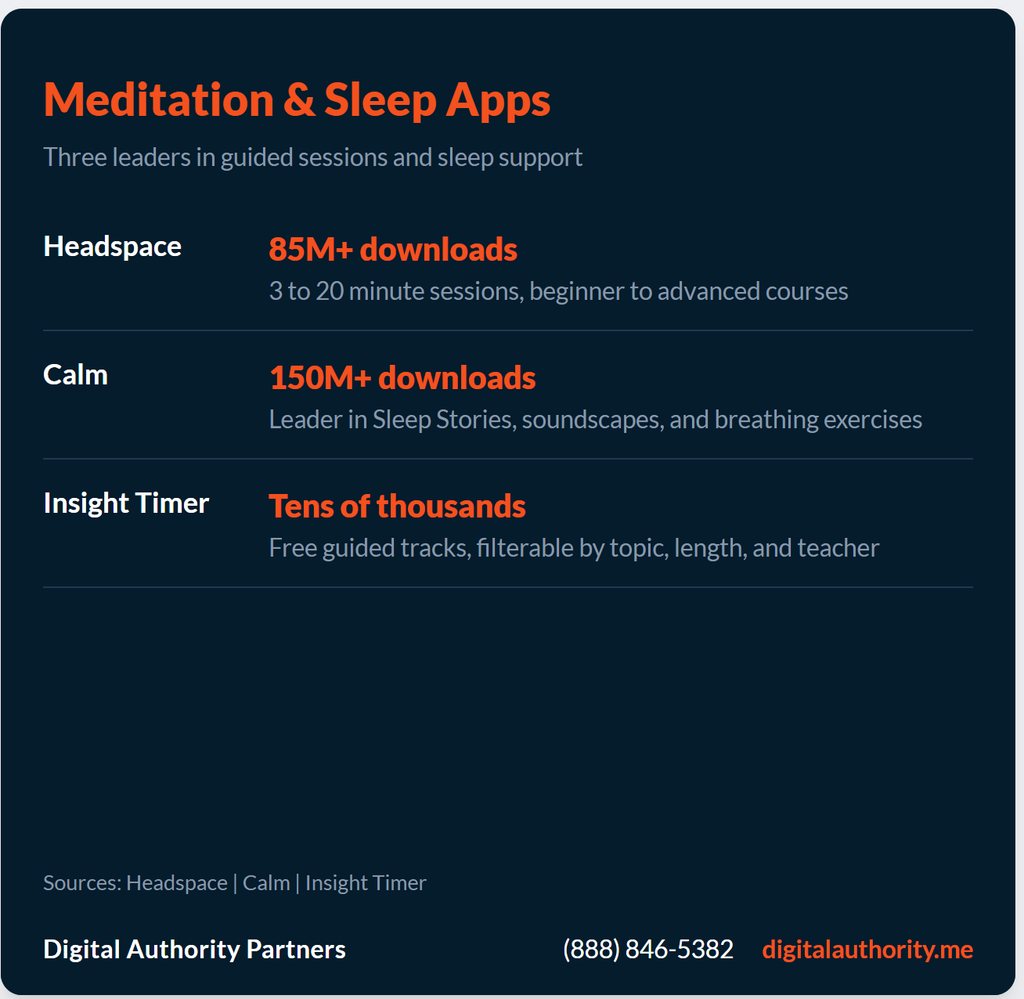
Headspace helped take meditation mainstream, moving it from wellness retreats into daily routines for busy professionals. It remains the most recognized meditation app, with more than 85 million downloads to date, and sessions typically range from three to 20 minutes, so you can start small and build.
The benefits of Headspace sessions include stress relief, sharper attention, better self-awareness, and greater anxiety management. Headspace offers individual meditations for beginners and longer courses for people working through specific challenges, which makes it easy to grow with the app over time.
Calm
Calm pairs guided meditation with a deep library of Sleep Stories, soundscapes, and breathing exercises. The app has surpassed 150 million downloads worldwide, and its Sleep Stories are one of the most recognized features in the meditation category. If falling asleep is your main struggle, Calm’s bedtime content is the strongest reason to download it.
Beyond sleep, Calm builds daily calm into small moments. A one-minute breathing exercise before a meeting or a short reset after a hard call fits into a realistic schedule. That low-effort design is why so many people keep using the app longterm.
You get short daily sessions, mood check-ins, and masterclasses from mental wellness experts. A free tier covers the basics, and a subscription unlocks the full catalog, which is useful once the app becomes part of your nightly wind-down.
Insight Timer
Insight Timer hosts one of the largest free meditation libraries available, with tens of thousands of guided tracks. You can filter by topic, length, and teacher, then set a customizable timer for silent practice. For most people, the free version alone delivers real daily value.
The community angle sets it apart. You can follow specific teachers, join live sessions, and track your streak as you build consistency. If you want depth without a paywall, Insight Timer is the easiest place to start a daily practice.
Which Apps Connect You With a Licensed Therapist?
Sometimes self-guided tools are not enough, and you want a therapist you can connect with virtually. Teletherapy is part of a broader shift you can track across the top telemedicine apps in healthcare, with messaging therapy suits people who process their thoughts in writing or feel anxious on camera.
You can send a note the moment something surfaces, then return to your therapist’s reply when you have space to absorb it. For many users, that steady, low-pressure contact builds momentum that weekly office visits alone rarely match. Two standout platforms make professional therapy more accessible and easier to start, namely Talkspace and BetterHelp.
Talkspace
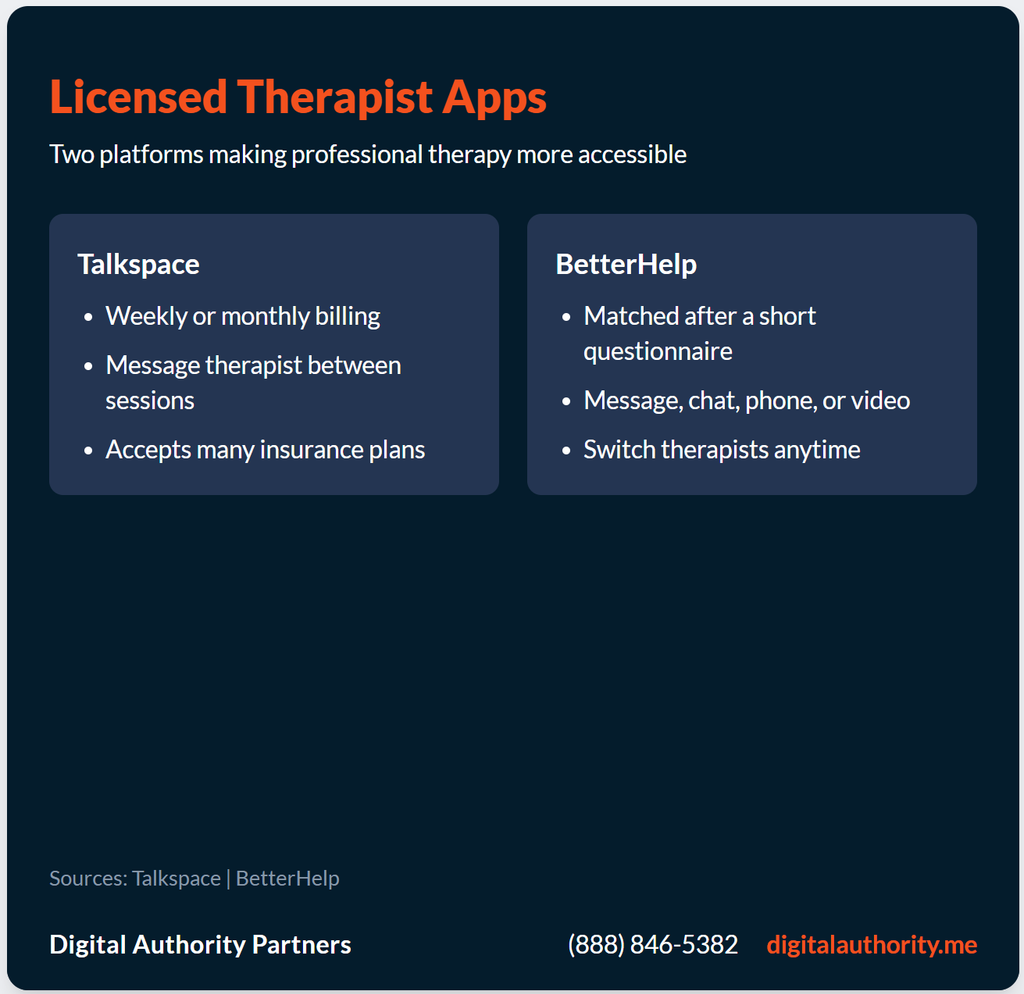
While many apps act as self-help guides, Talkspace delivers online therapy sessions with licensed professionals. Subscription plans are billed weekly or monthly, and the cost often lands below the price of in-person therapy. You also gain the option to message your therapist between sessions rather than waiting for the next slot.
As with any therapist, you might not find the perfect match on the first try, and you can switch providers if needed. Talkspace also accepts many insurance plans, which lowers the barrier further.
BetterHelp
BetterHelp runs one of the largest teletherapy networks in the world. After a short questionnaire, it matches you with a licensed therapist, then lets you connect through messaging, live chat, phone, or video. The flexibility suits busy schedules, and is an excellent app if you feel more comfortable opening up by text first.
If your first therapist is not the right fit, you can switch to a new one at any time without starting the process over. Finding the right connection matters more than getting it right immediately, and BetterHelp makes it easy to try again.
Sessions happen wherever you are, which removes the commute and the waiting room. For many people, that lower friction is the difference between starting therapy and putting it off again.
What Are the Best Apps for Anxiety and Mood?
When anxious thoughts or low mood take hold, structured tools help ground your response. These three apps lean on cognitive behavioral therapy and proven breathing techniques.
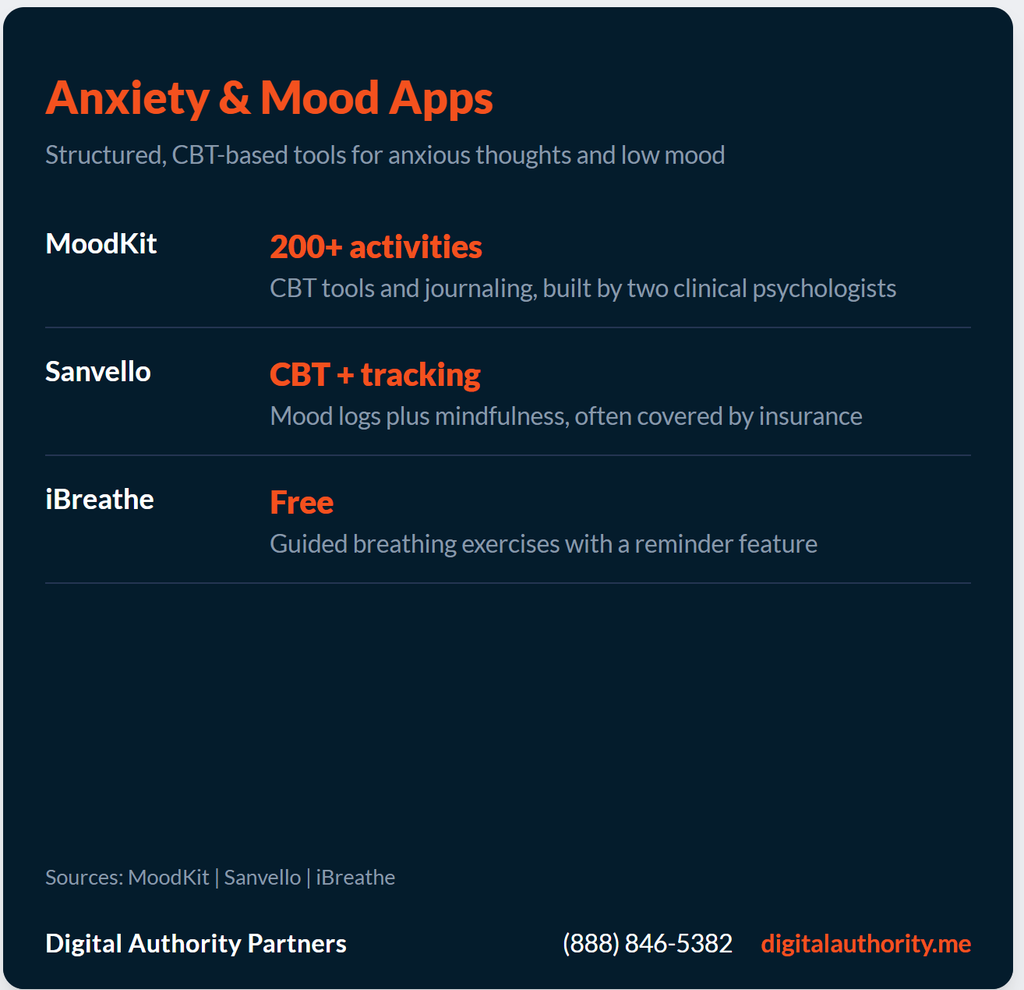
MoodKit
With more than 200 mood-boosting activities, MoodKit has built a reputation as one of the most established CBT-based mood apps on the market. Two clinical psychologists created it to help you rewire negative thinking using cognitive behavioral therapy.
This evidence-based app also includes a journaling feature. The value of journaling is hard to overstate: the built-in journal gives you a digital space to track negative thoughts, spot what triggers them, and work through them to build healthier thinking patterns.
Sanvello
Sanvello combines cognitive behavioral therapy, mindfulness, and mood tracking in one place. It targets stress, anxiety, and depression with guided journeys, daily mood logs, and coping tools you can reach for in the moment. Many insurance plans cover premium access, which makes it a practical pick for ongoing support.
The app charts your mood over time, so patterns you might miss start to surface. You can see how sleep, work, and relationships move the needle, then adjust. That feedback loop turns vague feelings into data you can act on, which is where lasting progress often begins.
iBreathe
A list of apps that improve mental health would feel incomplete without the stress-relieving power of iBreathe. This free-to-download app guides you through deep breathing exercises proven to reduce stress, ease anxiety, and help you feel calmer. The design stays simple and clutter-free, yet effective at what it sets out to do.
Breathing exercises work best as a daily habit. iBreathe includes a reminder feature so you can schedule notifications, and you can run a quick session any time a stressful moment leaves you needing to refocus.
Which Apps Help You Build Healthier Habits?
Mental wellness often comes down to small, repeated actions. These two apps turn daily self-care and habit change into something you actually stick with.
Finch
Finch turns self-care into a gentle game. You care for a virtual pet that grows as you complete daily check-ins, breathing exercises, and small goals. The playful design has made it especially popular with younger users who want support that feels light rather than clinical.
Gamification works here because it lowers the stakes. A missed day does not feel like defeat. By tying mood logs and reflection to a character you care about, Finch makes the habit easier to keep on the days motivation runs low.
Quit That!
Addiction affects many people who never name it as such. Most jump straight to smoking, drinking, or gambling, yet Quit That! also helps you break everyday habits like too much caffeine or junk food. The free app tracks your progress and counts the time and money you save.
Quit That! is a strong starting point for habit change through an app you enjoy. If you face deeper challenges, though, seeking direct professional help is often the better path. Explore the programs it offers, then build from there.
Are Mental Health Apps Effective?
The evidence is encouraging. A 2025 review of evidence based mental health apps found they can improve user health outcomes, especially for anxiety and depression. A UW Medicine clinical study went further, showing one app was as effective as a clinic-based group program at roughly half the cost.
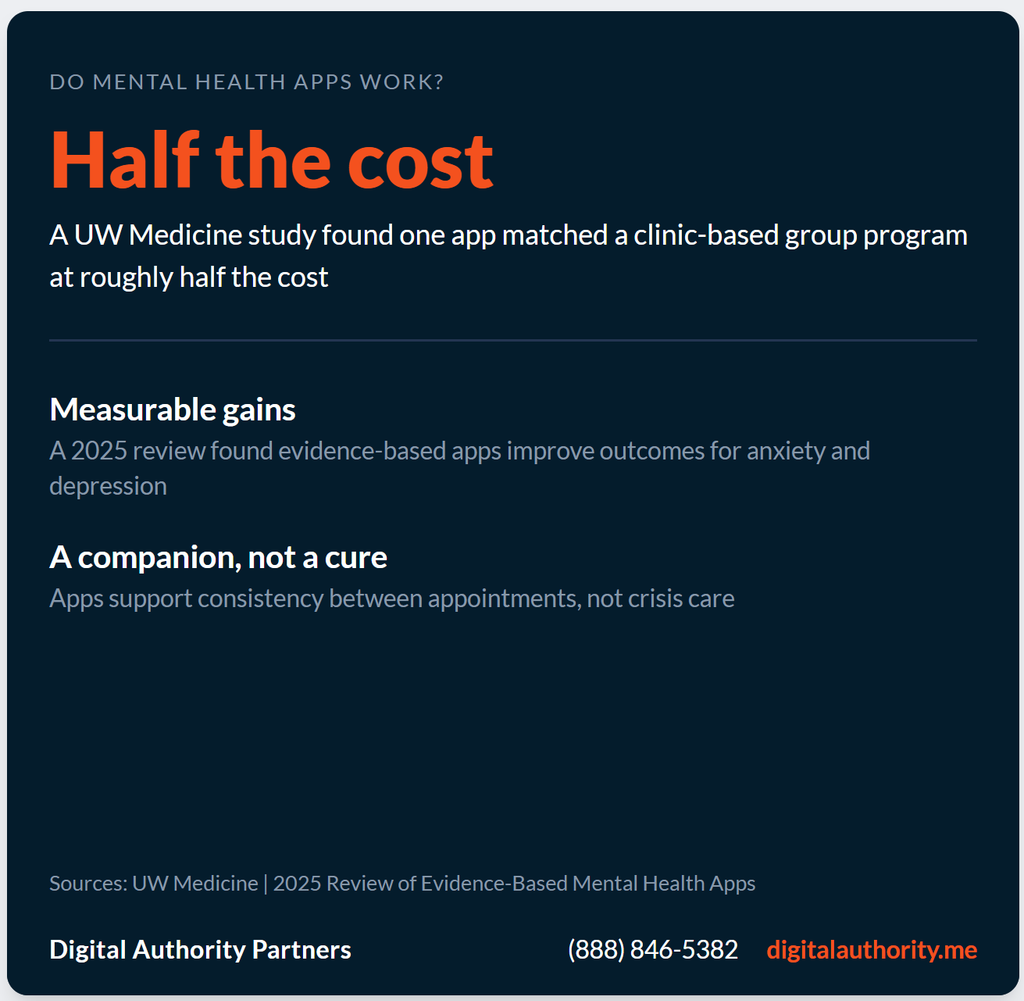
Apps work best as a companion to care, not a replacement for it. They help you practice coping skills, track patterns, and stay consistent between appointments. Apps do not cure conditions, and they are not built for crisis situations, such as experiencing suicidal thoughts. If you are in crisis, call or text 988 to reach the 988 Suicide & Crisis Lifeline, available 24/7, or contact a licensed professional right away.
One caveat matters: consistency drives results. Many people download a tool, use it for a week, then drift away before it can help. The apps that work are the ones you actually return to, which is why fit and ease of use matter as much as the underlying science. Treat the first month as a trial and judge by whether the habit sticks.
How Do You Choose the Right Mental Health App?
The best mental health app is the one you will open tomorrow. Start with the problem you most want to solve, then match the tool to that need. Consider these factors to narrow the field:
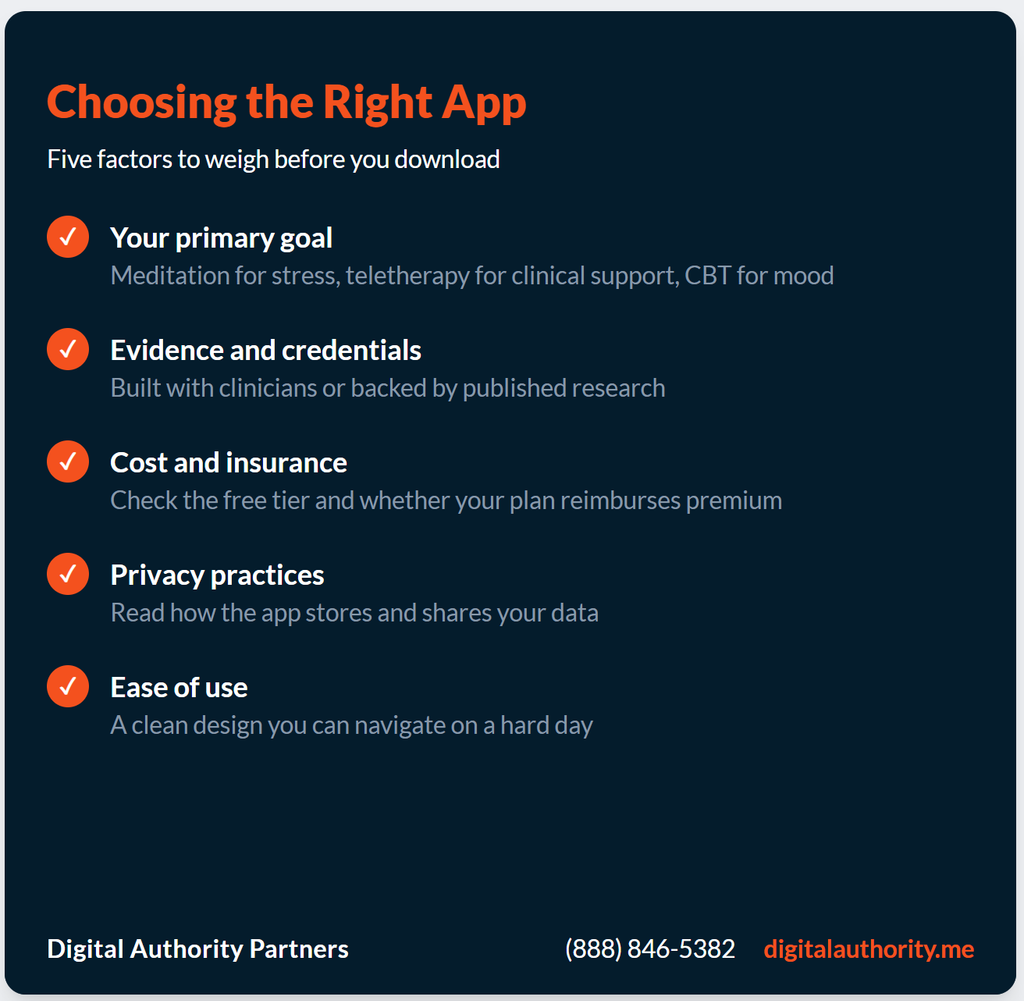
- Your primary goal: Pick meditation for stress, teletherapy for clinical support, or CBT tools for anxiety and mood.
- Evidence and credentials: Favor apps built with clinicians or backed by published research.
- Cost and insurance: Check whether a free tier covers your needs and whether your plan reimburses premium access.
- Privacy practices: Read how the app stores and shares your data before you sign up.
- Ease of use: Choose a clean design you can navigate on a hard day, not just a good one.
If you are choosing for a younger family member, start with our guide to mental health apps for kids. The right features and safeguards differ from the adult tools listed here.
What Features Should a Good App Have?
Not every download earns a place on your home screen. The strongest tools share a handful of traits that keep people coming back and protect their wellbeing along the way. Look for these signals before you commit:
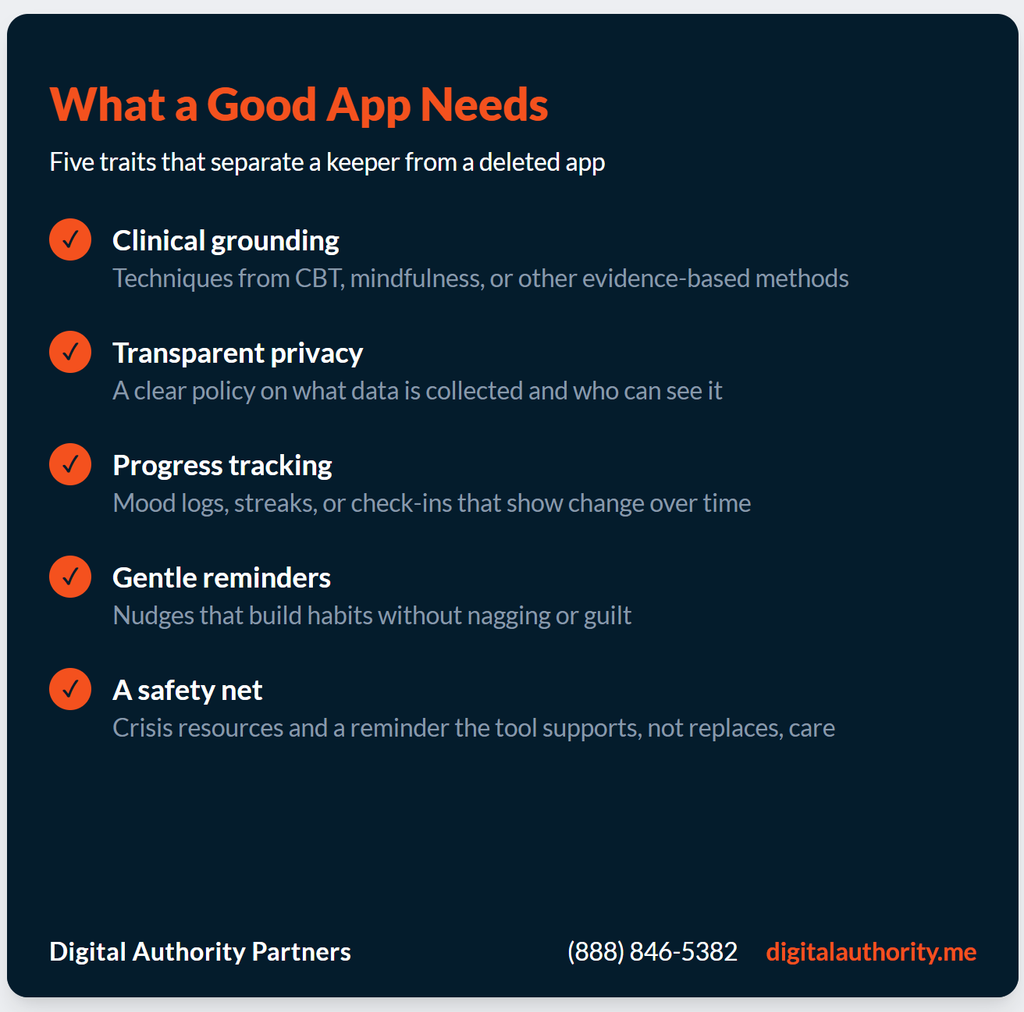
- Clinical grounding: Techniques drawn from cognitive behavioral therapy, mindfulness, or other evidence-based methods.
- Transparent privacy: A clear policy on what data is collected, where it lives, and who can see it.
- Progress tracking: Mood logs, streaks, or check-ins that show change over time and keep you motivated.
- Gentle reminders: Nudges that build a habit without nagging or guilt-tripping you into opening the app.
- A safety net: Crisis resources and a clear reminder that the tool supports professional care rather than replacing it.
When a product nails these basics, the experience feels supportive instead of stressful. That is the bar worth holding any download to before it touches your daily routine.
The table below also compares the 10 apps at a glance so you can shortlist quickly.
| App | Best For | Cost | Platform |
| Headspace | Guided meditation and focus | Free + paid | iOS, Android |
| Calm | Sleep stories and relaxation | Free + paid | iOS, Android |
| Insight Timer | Large free meditation library | Free + paid | iOS, Android |
| Talkspace | Online therapy with clinicians | Subscription | iOS, Android |
| BetterHelp | Matching with a licensed therapist | Subscription | iOS, Android |
| MoodKit | CBT activities and journaling | Paid | iOS |
| Sanvello | Anxiety, stress, and mood tracking | Free + paid | iOS, Android |
| iBreathe | Guided breathing for stress | Free | iOS, Android |
| Finch | Gamified daily self-care | Free + paid | iOS, Android |
| Quit That! | Breaking habits and tracking progress | Free | iOS |
Where Is Digital Mental Health Headed Next?
The category keeps evolving quickly, and artificial intelligence is leading the next wave. AI chat companions now offer guided support around the clock, while smarter personalization tailors content to your mood and history. Used responsibly, these features make support feel more relevant and more timely.
Wearables add another layer, linking sleep, heart rate, and activity to your emotional patterns. The teams that win this space pair genuine clinical input with thoughtful design and honest data practices. That combination is exactly what turns a promising idea into a product people trust with something as personal as their mental health.
Frequently Asked Questions About Mental Health Apps
These are the questions readers ask most before choosing a mental health app. Here are direct answers to help you decide with confidence:
Are Mental Health Apps Effective?
Research is promising. Recent clinical reviews report measurable improvements in anxiety and depression among people who use these tools regularly. The effect is strongest when you stay consistent and treat the app as a complement to professional care rather than a substitute for it.
Can a Mental Health App Replace Therapy?
No. Apps are excellent for practicing skills, tracking moods, and staying consistent between sessions, yet they cannot replace a licensed clinician. For diagnosable conditions or any crisis, professional care should always come first.
How Much Do the Best Mental Health Apps Cost?
Prices vary widely. Many of these tools offer a free tier, while premium plans often run between $10 and $15 a month or roughly $70 a year. Teletherapy platforms cost more because you pay for a licensed professional’s time.
Are There Free Mental Health Apps Worth Using?
Plenty of free mental health apps deliver real value without a subscription. Insight Timer offers tens of thousands of guided meditations at no cost. iBreathe keeps its breathing exercises completely free. Quit That! tracks habits and savings for free, and Finch covers daily self-care with a generous free tier.
A smart approach is to start free, build a routine, and upgrade only once an app earns a place in your day. That way you spend money on tools you already know you will use. Many premium plans also offer a trial week, so you can test the full feature set before any charge lands. Treat that trial as a real evaluation rather than a formality.
Are Mental Health Apps Safe and Private?
Quality and privacy vary, so read each app’s data policy before signing up. Look for clear statements on how your information is stored and shared. Favor apps built with clinicians or backed by research, the same standard that defines trustworthy patient-facing health tools.
Do Mental Health Apps Help With Anxiety?
Many do. Tools built on cognitive behavioral therapy and guided breathing give you practical ways to calm anxious thoughts. MoodKit, Sanvello, and iBreathe are strong examples, and consistency is what turns these exercises into lasting relief.
What Is the Best Mental Health App for Beginners?
For most newcomers, a mental health app like Headspace or Calm is the easiest entry point. Both use short guided sessions, friendly design, and free trials, so you can build a habit without feeling overwhelmed on day one.
Are Mental Health Apps Covered by Insurance?
Some are. Talkspace and Sanvello accept many insurance plans, and a growing number of employers offer premium subscriptions as a benefit. Check directly with your provider or HR team to confirm what your plan reimburses.
How Long Until a Mental Health App Works?
Most people notice small wins, like calmer breathing or steadier sleep, within a couple of weeks. Deeper, lasting change usually takes daily use over one to three months, which is why ease of use matters so much.
Download The Right Mental Health App Today
More than a billion people now seek everyday support, so demand for these tools keeps growing. The right mental health app meets a real need, earns trust, and fits into a daily routine. Keep these fundamentals in mind:
- Match the tool to your goal, because meditation, teletherapy, and CBT each solve a different problem.
- Trust the evidence, since apps built with clinicians and research deliver stronger results.
- Start free, then upgrade only once an app earns a place in your day.
- Stay consistent, as daily use over weeks is what turns small wins into lasting change.
Digital Authority Partners works behind the scenes with healthcare and digital health companies, including the teams building healthcare app development products like the ones featured above. If you’re curious how a mental health app reaches the people who need it, schedule a free consultation today to talk with our team.
Want To Meet Our Expert Team?
Book a meeting directly here

Related Articles

Anthropic’s crawlers read about 38,000 pages for every one visitor Claude sent to a website, according to a 202...

IN SHORT Digital Authority Partners audited 150 US ABA and autism therapy clinic websites in July 2026, scoring each ...
United States shoppers spent $326.7 billion online in the first quarter of 2026, according to the U.S. Census Bureau....