
9 Steps for a Higher-Ranking Optometry SEO Strategy

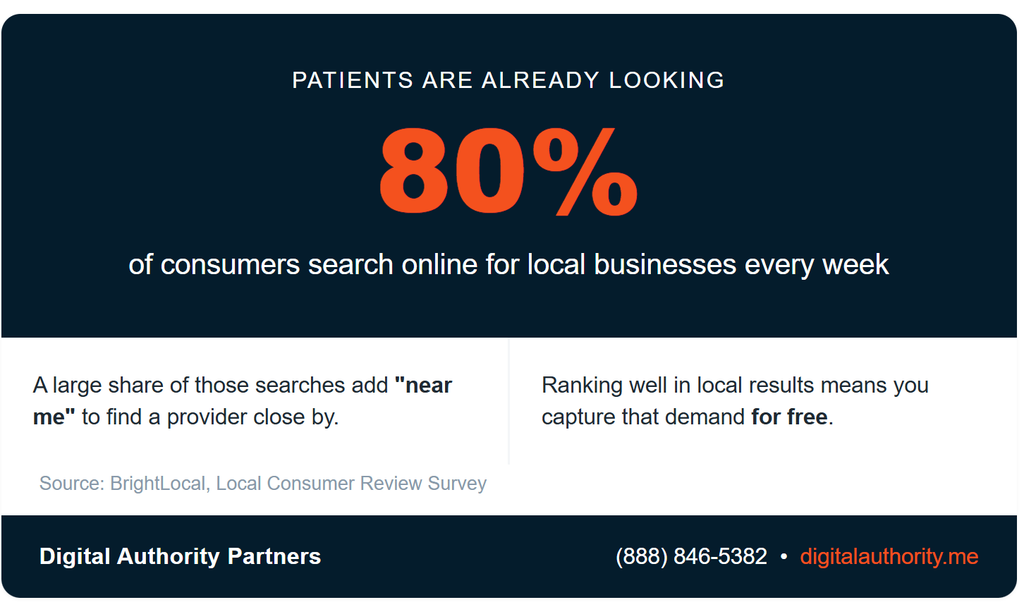
Around 80% of consumers search online for local businesses every week, and a large share add “near me” to find providers close by. A strong optometry SEO strategy puts your practice in front of those patients at the moment of their search.
We work as one of the top SEO agencies for healthcare, and we’ve turned years of practice into nine steps you can act on today. You’ll learn how to claim listings, build service pages, earn reviews, use video, and show up in AI search.
Why Does Optometry SEO Matter for Your Practice?
Around 80% of consumers search online for local businesses every week, and a large share add “near me” to find providers close by. When your practice ranks well, you capture that demand for free.
That’s why a deliberate optometry SEO strategy beats guesswork. Our optometry SEO services for clinics focus on the signals search engines reward: local relevance, helpful content, fast mobile pages, and genuine authority. The nine steps below give you the same framework we use with clients.
1. Set Up Your Local Business Profiles
The first step in any optometry SEO strategy is claiming your business on local listings. Controlling your profile makes sure patients searching for an optometrist see the correct hours, phone number, and location. It also feeds the data that search engines use to rank you in the local map pack. Each platform claims and verifies profiles a little differently, so plan for that:
- Google: Preview your location in Google Maps and claim your Google Business Profile. This profile holds your contact details, hours, services, and patient reviews. Google Map ads extend your reach even further. These paid placements put your pin above organic map results for high-intent local searches, giving new patients another way to find you before they even scroll.
- Facebook: Create a personal account first, then build your business page. A Facebook page supports direct messages, posts, and comments, so patients can interact with you.
- Bing and others: Claim your Bing Places for Business listing, then check Apple Maps, Healthgrades, and Zocdoc for an unclaimed profile. Optometry-specific directories carry extra weight with patients comparing providers, so claim those first.
Keep your name, address, and phone number identical across every listing. Search engines cross-check these details, and even small mismatches like “Ave” versus “Avenue” can confuse them and weaken your local ranking. Pick one format and use it everywhere, from your website footer to every directory you claim. Add complete information to each profile, too. Upload current photos, list your services, set accurate holiday hours, and choose the right business categories.
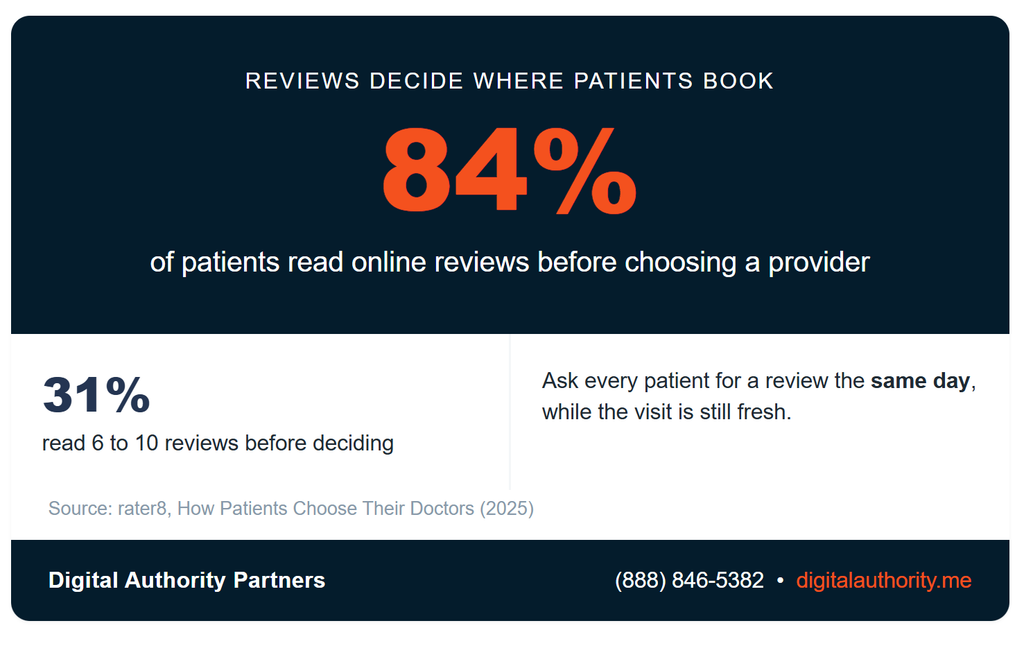
Then back up your completed profile with positive reviews. About 84% of patients read online reviews before choosing a healthcare provider, with 31% reading 6 to 10 reviews before deciding. Ask every patient for a review by sending a text or email with a direct link to your Google Business Profile the same day of their appointment, while the experience is still fresh.
A steady flow of recent reviews does more for your local ranking than a handful of five-star ratings from years ago.
2. Build a Page for Each Service
Search engines look for clear signals about what each page offers. A keyword is one of the strongest signals, and a dedicated page lets you use it well. When you give each service its own page, you tell Google exactly what you do and who you serve.
A focused page for contact lens fittings, another for pediatric eye exams, and another for dry eye treatment will each rank for their own searches. That beats one crowded page trying to cover everything. The benefits of individual service pages include:
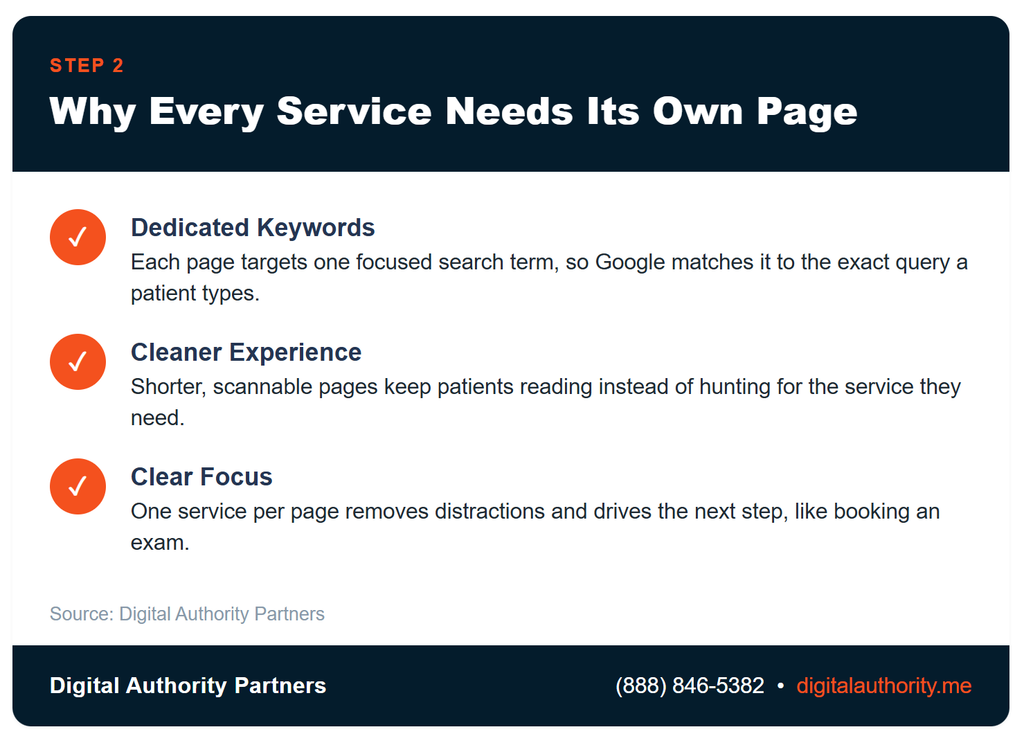
- Dedicated keywords: Each page targets one focused search term, so Google can match it to the exact query a patient types instead of guessing which service you mean.
- Cleaner experience: Shorter, scannable pages keep patients reading instead of hunting through unrelated services for the one they need.
- Clear focus: One service per page removes distractions and drives the next step, whether that’s booking a contact lens fitting or scheduling a pediatric exam.
Write each service page for the patient first. Open with the problem they’re trying to solve, explain how the service helps, and answer the questions they ask before booking. Add a clear next step, like a booking button or phone number, near the top and the bottom of the page.
Link these service pages to your booking form so interest turns into appointments. Strong service pages also give your internal links and keyword strategy a home, which makes the rest of your optometrist SEO work easier to organize.
3. Produce High-Quality, Helpful Content
High-quality content is one of the most cost-effective ways to climb search engine results pages. Helpful content answers the questions your patients ask, giving search engines more reasons to rank your pages higher and put your practice in front of more searchers.
Google measures medical content against Experience, Expertise, Authoritativeness, and Trustworthiness (E-E-A-T). Strong medical SEO depends on E-E-A-T, so show real clinical experience in everything you publish. Content moves your rankings for a few reasons:
- Fresh posts and updates encourage search engines to crawl your site more often.
- Authoritative articles signal expertise that Google rewards in healthcare.
- More indexed pages give you more chances to match patient searches.
Quality starts with clarity. Skip the jargon and explain conditions the way you would to a patient sitting across from you. Short sentences and frequent paragraph breaks keep pages scannable, and a well-placed image, chart, or video often clarifies a topic faster than another paragraph of text. Clearer content keeps patients on the page longer, and that engagement signals relevance to Google.
4. Offer Educational Resources
Educational content earns patient trust long before anyone calls your office. When someone lands on a clear explanation of why their eyes feel dry or what to expect from LASIK, they leave with a better opinion of your practice than of the search result they clicked away from. That trust is what turns a search into a booking. Educational content pays off in a few specific ways:
- Builds patient confidence: A clear explanation of a diagnosis or procedure helps patients feel prepared instead of anxious before their appointment.
- Demonstrates your expertise: Detailed, accurate content lets patients judge your knowledge and credentials before they ever sit in your chair.
- Extends time on site: Patients who find one helpful answer tend to keep browsing, which signals to search engines that your site satisfies searchers.
Treat education as one piece of your wider content plan. The same content can live as a blog post, a short video, and a printed leaflet in your waiting room. You can also publish guides, FAQs, and checklists that patients save and share.
Pick topics straight from your exam room. The questions patients ask most, like how often to get an eye exam or whether blue light glasses help, translate well into educational pieces. Each educational topic satisfies real search intent and gives you another page that can rank and earn AI citations.
5. Target Practical, Patient-Focused Keywords
Good keyword research decides who finds your practice and who finds a competitor instead. Keywords summarize each page and tell search engines what patients can expect, so choose terms your patients actually type into search, like ‘eye doctor for kids near me,’ instead of the clinical names you use in the exam room, like ‘pediatric vision assessment.’ Three practical keyword types work well for optometrists:
- Long-tail keywords: Combine four or more words, like “pediatric eye exam near me.” These keywords draw fewer searches but convert at a higher rate.
- Patient-focused keywords: Match what your market wants. A contact lens specialist should target lens-related terms instead of generic “glasses” searches.
- Location-based keywords: Name your city or neighborhood. They pair perfectly with local listings and city service pages.
Give your keyword list the same careful thought you’d give a diagnosis. The right terms match what patients actually search, not just what sounds professional.
6. Use the Power of Video
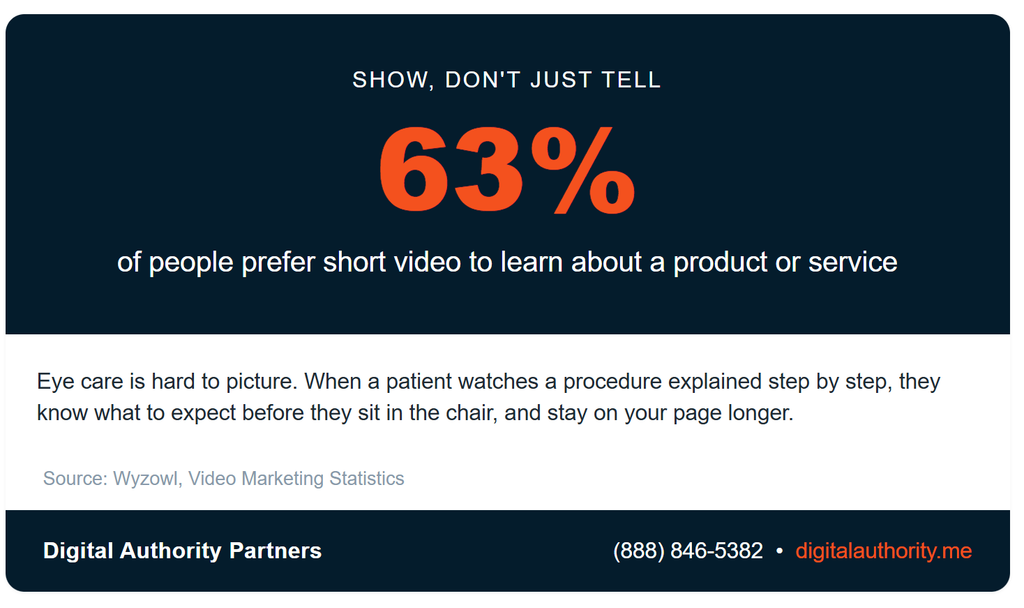
About 63% of people prefer short videos to learn about a product or service over any other medium. Eye care is hard to picture since it’s so anatomical, and that’s exactly why explainer videos work. When a patient sees a procedure explained step by step, they know what to expect before they sit in the chair.
Short, informational videos break down complicated topics into clear, friendly explanations. If you’re unsure whether a subject deserves a video, ask yourself whether visuals would explain it better than text alone. Examples of topics that benefit from video content include:
- How to relieve and reduce eye strain
- Why dry eye can damage your vision
- What to expect during LASIK eye surgery
Video does the double duty text alone can’t: it clears up confusion for the patient and keeps them on your page longer, which search engines read as a signal that your content is worth ranking.
7. Build a Strong Internal Link Network
Internal links make your site easier for search engines to crawl, a principle Google’s own crawling guidelines confirm. Better crawlability gets more of your pages indexed, and only indexed pages can show up in search results. A smart link network also guides patients from a blog post to the service page where they can book the appointment. You can build a strong internal network with these habits:
- Link with purpose: Add internal links only where they genuinely help the reader reach a related service or resource. .
- Write descriptive anchors: Make sure the linked text reflects the page it points to.
- Fix broken links: Use Google Search Console to find and repair broken internal links.
- Build topic clusters: Group related pages around a main topic, like a contact lens hub linking to fitting, care, and pricing pages, so search engines see topical depth and patients find every answer in one place.
Done well, internal linking spreads ranking strength across your whole site and keeps patients moving toward a booking.
8. Design for Mobile-First Indexing
If you want to rank, design for mobile first. Your site has to load fast and read well on a small screen because most patients are searching for an optometrist on their phone. Mobile devices generate the majority of web traffic worldwide, so a slow or clunky mobile experience turns away more visitors than ever.
This shift is why Google uses mobile-first indexing, which ranks your site based on its mobile version. Desktop sites aren’t penalized outright, but strong mobile optimization earns real ranking points. Three quick ways to build mobile-first design into your optometry SEO strategy:
- Clean up the interface: Remove anything patients don’t need on a small screen.
- Make navigation simple: Use clear menus so patients find services in one or two taps.
- Optimize your images: Compress files so heavy pages don’t slow your site down.
A clean interface, simple navigation, and compressed images add up to a mobile site that keeps patients engaged instead of bouncing to a competitor. Google’s mobile-first index rewards exactly that kind of experience, so the work you put into mobile design pays off directly in search visibility.
9. Earn Rich Results With Schema Markup
Your site is crawled, indexed, and showing up in search. So how do you stand out from the practice listed right above you? The answer is rich results.
A search snippet is like a book’s summary, a quick preview of what’s inside. A rich result is the upgraded version, with extras like star ratings, hours, FAQs, or images that make your listing more clickable.
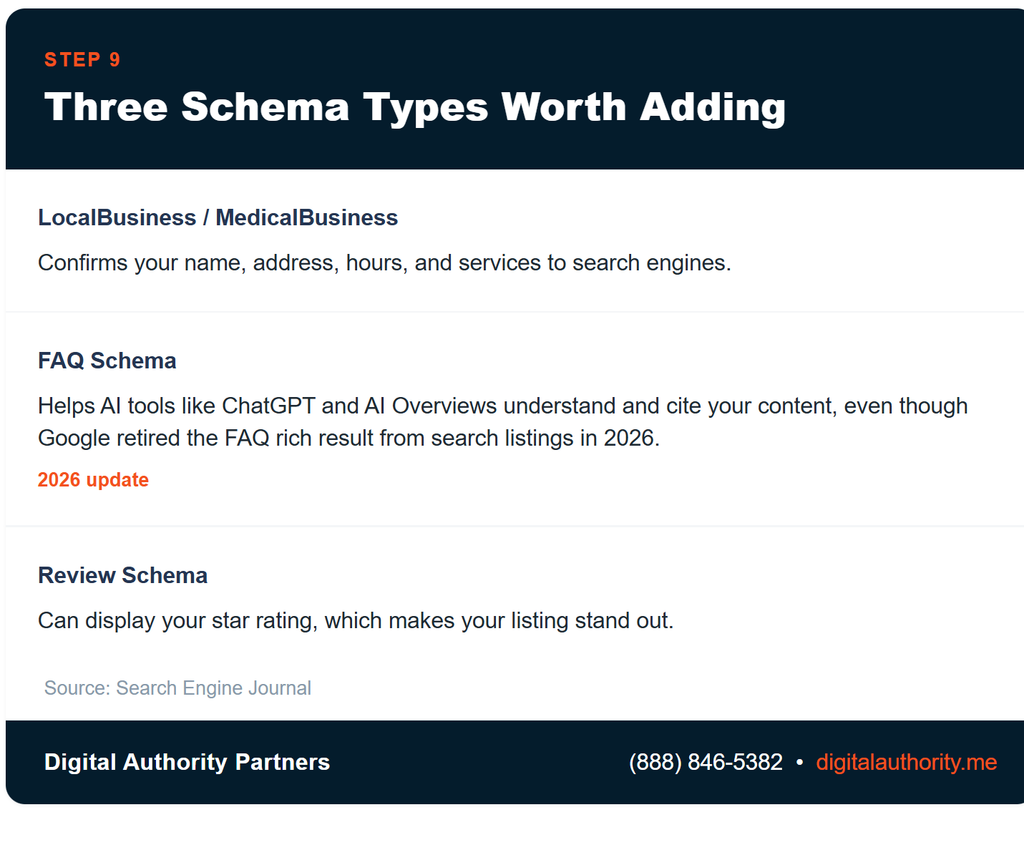
Add schema markup to your site to earn rich results. Schema is structured data that tells search engines exactly what each piece of content means. From there, you can qualify for review stars, FAQ snippets, and other eye-catching formats. It takes some setup, but the higher click-through rate is worth it. A few schema types matter most for an optometry practice include:
- LocalBusiness or MedicalBusiness schema confirms your name, address, hours, and services to search engines.
- FAQ schema helps AI tools like ChatGPT and Google’s AI Overviews understand and cite your content, even though Google retired the FAQ rich result from search listings in 2026.
- Review schema can display your star rating, which makes your listing stand out.
You don’t need to code this by hand. Many content platforms offer schema plugins, and a quick test in Google’s Rich Results Test tool confirms your LocalBusiness and Review markup is valid and eligible before you publish.
How Does AI Search Change Optometry SEO?
Patients now ask AI tools like Google’s AI Overviews, ChatGPT, and Perplexity to recommend an optometrist, and those tools cite the sources they trust. Showing up in an AI answer is becoming as valuable as ranking on the first page of classic search results.
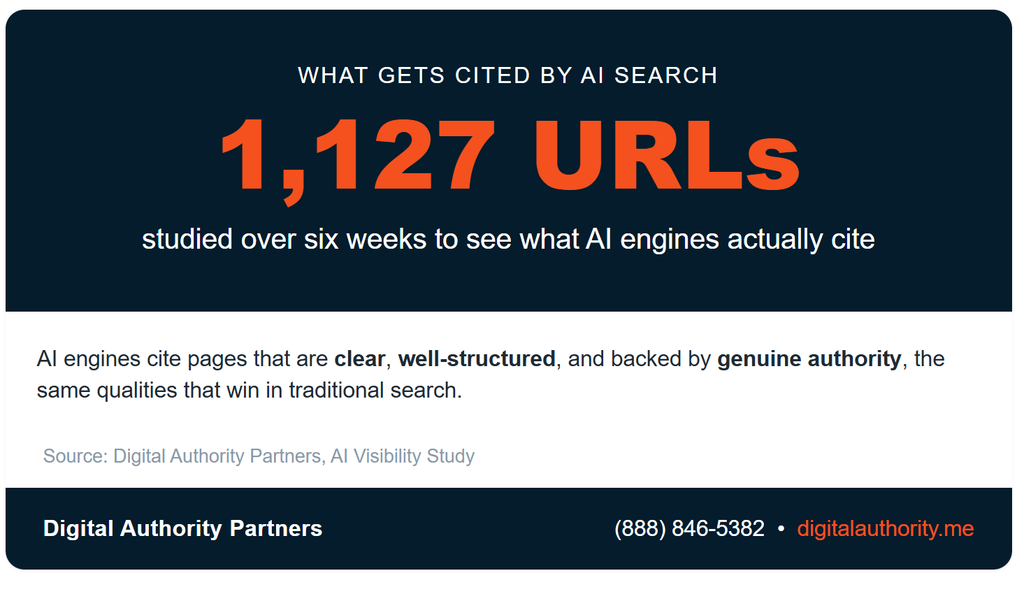
We studied this directly. Our six-week analysis of 1,127 URLs found that AI engines cite pages that are clear, well-structured, and backed by genuine authority, the same qualities that win in traditional search.
Most of the steps above already build toward AI visibility. Helpful content, a clean site structure, and accurate schema markup give AI engines the signals they look for when deciding which practice to recommend.
To help AI tools quote you directly, answer common patient questions in clear, self-contained paragraphs, use descriptive headings, and keep your facts current. The practices that earn AI citations today will show up more often when patients ask an AI assistant to recommend an optometrist tomorrow.
Frequently Asked Questions About Optometry SEO
Patients ask Google plenty of questions before they ever ask your front desk. Here are the ones that come up most about optometry SEO, with straightforward answers you can act on today.
What Is an Optometry SEO Strategy?
An optometry SEO strategy is a plan to help your practice rank higher in search results so more local patients find and book you. It combines local listings, service pages, helpful content, reviews, mobile design, and schema markup. Each piece signals to search engines that your practice is relevant, trustworthy, and worth recommending.
How Long Does SEO Take to Work for an Optometrist?
Most practices see early movement in three to six months, with stronger results between six and twelve months. Local listings and reviews can lift visibility quickly, while content and authority build over time. Consistency is what compounds, so the practices that publish and optimize steadily pull ahead.
How Much Does SEO for Optometrists Cost?
SEO for optometrists varies with your market, competition, and goals. Some practices handle local listings and reviews in-house at little cost, while others invest in monthly content, technical work, and strategy from an agency. The right budget is the one that delivers more patient bookings than it costs, so track results closely.
How Do Online Reviews Affect SEO for Optometrists?
Reviews influence both rankings and patient trust, and most patients read reviews before choosing a provider. Ask every patient for a review after a good visit, ideally with a direct link to your Google Business Profile, since a steady stream of recent, genuine reviews strengthens your profile and signals to search engines that patients value your care. Responding to every review, positive or critical, reinforces that signal further.
How Does Google Rank Optometry Websites?
Google looks at relevance, authority, and how well a page serves the patient searching. It checks your local signals, the quality and freshness of your content, your mobile speed, your reviews, and how closely your pages match the search. For healthcare content specifically, Google applies stricter E-E-A-T standards, so real clinical expertise and accurate information carry real ranking weight.
How Do I Measure the Results of My Optometry SEO Strategy?
Track the metrics that tie to bookings. Watch your keyword rankings, organic traffic, Google Business Profile actions like calls and direction requests, and the number of appointments from search. Google Search Console and Google Business Profile insights show most of this for free. Review the data monthly so your optometry SEO strategy keeps improving.
Build Your Optometry SEO Strategy With Confidence
Patients decide where to book predominately from search and reviews. The nine steps above help your practice be the one they find first.
Ready to grow your practice? Contact our SEO team to build an optometry SEO strategy tailored to your market, or call us at (888) 846-5382. We’ll help you turn search visibility into a steady flow of new patients.
Want To Meet Our Expert Team?
Book a meeting directly here

Related Articles

The best health apps turn your phone into a daily tool for tracking habits, managing health conditions, and building ...

A healthcare chatbot gives your patients an always-open front door. It answers a question at midnight, books an appoi...

Nearly all HITRUST-certified environments stayed breach-free last year, which is why HITRUST certification has become...